

E-commerce businesses need to feel confident that their fraud prevention tools effectively protect revenue and reputation without causing unnecessary customer frustration. Making smarter trust decisions at every step helps you feel in control and assured of your security measures.
In this article, we will help you evaluate fraud prevention software for e-commerce sites, introduce the top tools available, compare them in a clear table, point out common mistakes to avoid, and explain when you need identity or age verification. By the end, you’ll know which tool fits your business and why, helping you save time and avoid losing revenue.
How to Evaluate E-Commerce Fraud Prevention Software Before Choosing a Tool
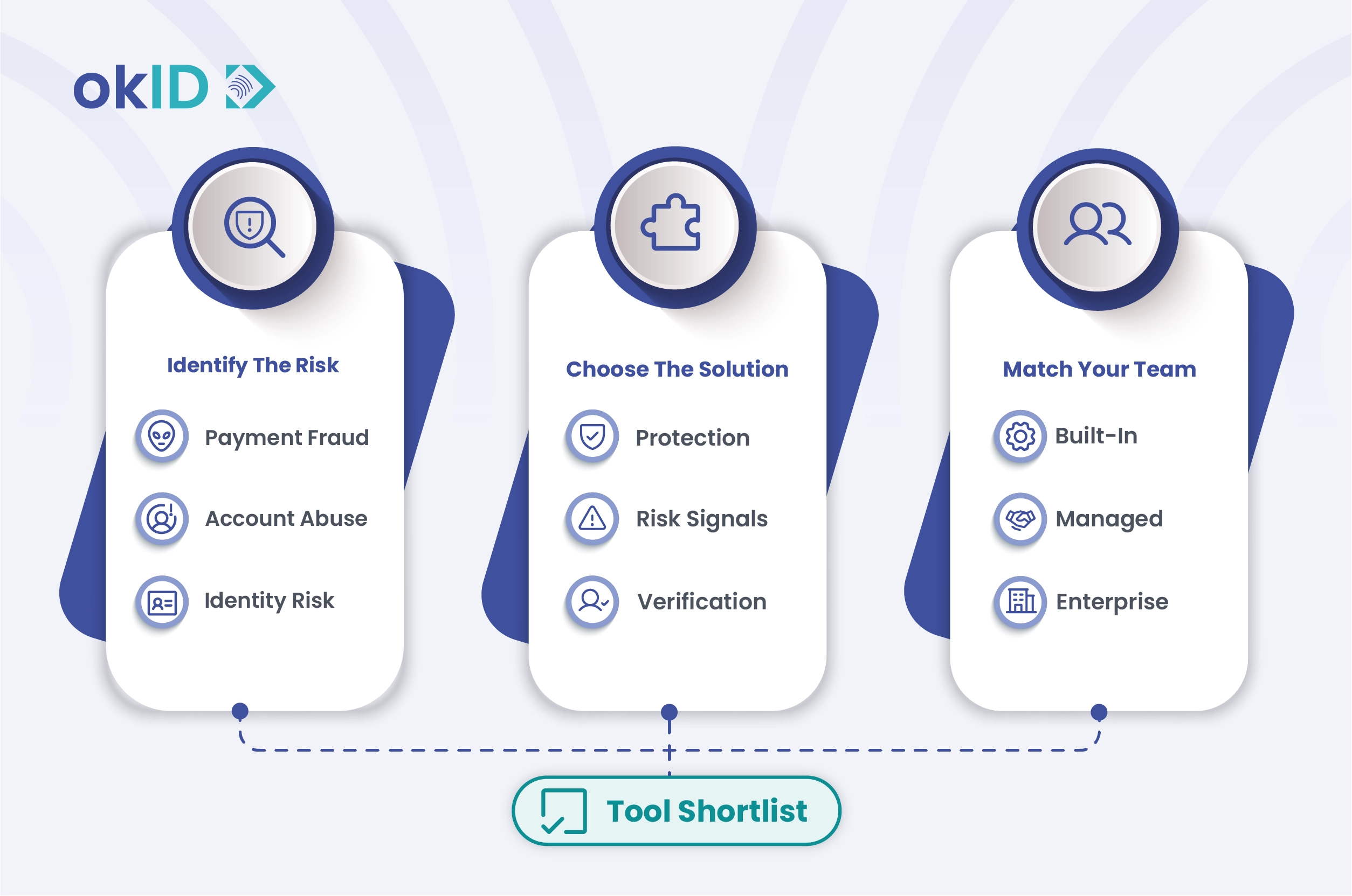
Before looking at specific software, it’s important to know what sets each solution apart. These criteria help you compare fraud prevention solutions based on risk coverage, customer friction, integrations, and operational fit.
Risk Coverage
Not all tools cover the same types of e-commerce fraud. Essential areas to consider include:
- Payment fraud: Transactions made with stolen or counterfeit cards.
- Account takeover: Hijacked customer accounts are used to steal goods or loyalty points.
- Chargeback fraud / friendly fraud: Legitimate-looking orders later disputed by the customer.
- Refund/return abuse: Exploiting return policies to gain free products or credits.
- Promo, coupon, or loyalty abuse: Using discount codes, gift cards, or points fraudulently.
The 2025 Global eCommerce Payments and Fraud Report from Merchant Risk Council says that refund and policy abuse is the biggest fraud concern for 47% of merchants, while payment fraud accounts for about 3.2% of global ecommerce revenue.
Pick a solution that matches your business’s main fraud risks, whether those are in payments, account management, or after-purchase activities.
Accuracy vs Friction
Good tools catch real fraud but don’t block real customers. If filters are too strict, you might lose sales and trust. Look for tools that use risk-based decisions, letting low-risk users proceed easily and requesting extra checks only for high-risk transactions, which helps maintain customer trust and reduce cart abandonment.
Chargeback Protection and Liability Model
Some platforms, such as Riskified and Forter, offer chargeback guarantees and absorb eligible fraud losses. This model is useful when checkout fraud is your main risk. But chargeback protection does not verify the user’s identity. If your risk starts with fake accounts, synthetic identities, seller onboarding, or age-restricted purchases, OKID adds a different layer by verifying the person before the transaction becomes a problem.
Identity and Account Risk Signals
Fraud doesn’t just happen with payments. It often starts when someone creates an account or logs in. Good software checks for:
- New account risk
- Login anomalies
- Behavioral signals
- Device and IP intelligence
Strong identity verification tools are essential if you have high-risk onboarding or sell regulated products.
Operational Usability
Your team must efficiently manage fraud alerts, rules, and manual reviews. Look for:
- Intuitive dashboards
- Rule management
- Manual review workflows
- Real-time alerts
- Reporting and audit capabilities
If the interface is too complicated, even the best tool won’t be effective.
Scalability and Integrations
Your fraud solution should integrate seamlessly with:
- E-commerce platforms (Shopify, Magento, BigCommerce)
- Payment providers
- Marketplaces and multi-vendor platforms
- APIs for custom workflows
Scalable tools can grow with your business, making it easier to expand your systems.
Pricing Fit and Total Cost of Ownership
Don’t just consider subscription cost. Evaluate the total cost, including:
- Fraud losses prevented
- Manual review hours
- False declines affecting revenue
- Integration and operational costs
Paying a bit more for a tool can actually save you money in the long run by reducing chargebacks and lost sales.
Why Do Businesses Add Identity Verification to Fraud Prevention?
Fraud prevention platforms often focus on transaction risk, behavioural signals, and payment activity. However, some fraud scenarios require businesses to verify the identity of the person behind the action.
Identity verification becomes important when businesses need to confirm age, validate customer information, verify marketplace sellers, prevent synthetic identities, or support regulatory requirements.
For businesses with regulated onboarding, age-restricted products, or compliance-sensitive customer journeys, KYC verification software can help verify that users are legitimate before they can access higher-risk actions.
Rather than replacing fraud prevention software, identity verification adds another layer of trust when risk depends on who the user is, not just how they behave.
Top 9 E-Commerce Fraud Prevention Software Tools
Here are some of the most trustworthy and popular platforms. Each one is described by who it’s best for and what makes it unique.
1. OKID
Best For: Businesses that need identity verification for onboarding, seller verification, account recovery, or age-restricted purchases.
Known For: Helping businesses verify who is behind an account, transaction, or customer action.
OKID is a strong fit for e-commerce businesses where risk is tied to the user behind the transaction, not just the transaction itself. While many fraud prevention platforms focus on payment behaviour, chargebacks, and device signals, OKID helps businesses establish trust earlier in the customer journey through identity verification.
This can be particularly valuable for marketplaces, age-restricted products, seller onboarding, account recovery, and fraud scenarios involving synthetic or stolen identities.
Why It Stands Out: Helps businesses address identity-related fraud before it reaches checkout.
Capabilities:
- Identity verification
- Biometric verification
- OCR & MRZ extraction
- NFC validation
- Fraud detection
- Age verification
- Real-time verification workflows
Watch Out For: Not designed as a chargeback guarantee platform.
Choose It If: Your business needs to know who the user is before deciding whether to trust them.
2. Riskified
Best For: Larger merchants focused on revenue recovery and decision automation.
Known For: Enterprise-grade automation and high approval rates.
Riskified is built for high-volume ecommerce businesses that want to reduce fraud while approving more legitimate transactions. It is a good fit when strict rules may be blocking good customers and hurting revenue.
Why It Stands Out: Offers chargeback guarantees with deep analytics.
Key Capabilities:
- ML-based risk scoring
- Account takeover prevention
- Dispute management
Watch Out For: Requires integration effort for complex platforms.
Choose It If: You need robust automation for high-volume ecommerce operations.
3. Forter
Best For: Enterprise ecommerce and marketplaces needing real-time trust decisions.
Known For: End-to-end coverage from signup to checkout.
Forter works well for businesses where fraud is not limited to payment. It supports decisions across accounts, transactions, and customer behaviour, making it useful for marketplaces, travel, digital goods, and complex ecommerce journeys.
Why It Stands Out: Combines behavioural analytics and machine learning to enable contextual decisions.
Key Capabilities:
- Risk scoring
- Device intelligence
- Transaction monitoring
- Account protection
Watch Out For: Enterprise-focused, may be overkill for SMBs.
Choose It If: Your business handles high-value orders and complex flows.
4. Sift
Best For: Businesses needing broad protection against fraud and abuse beyond payment fraud.
Known For: Multi-channel, multi-fraud-type coverage.
Sift is useful when fraud starts before checkout. If your business deals with fake accounts, account takeovers, promo abuse, or suspicious user behaviour, Sift provides a broader view than payment-only tools.
Why It Stands Out: Covers signup, login, transactions, account abuse, and behavioural risk.
Key Capabilities:
- ML fraud scoring
- Identity signals
- Account takeover prevention
- API integration
Watch Out For: Learning curve for complex feature set.
Choose It If: You need a holistic solution beyond just payments.
5. Kount
Best For: Merchants focused on payments, loyalty, and account protection.
Known For: AI-driven risk scoring and omnichannel fraud prevention.
Kount is a good fit for retailers that need layered fraud detection across multiple touchpoints. It is especially relevant when fraud affects payment activity, account behaviour, loyalty programs, or repeat customer journeys.
Why It Stands Out: Strong analytics and integration with loyalty programs.
Key Capabilities:
- Device fingerprinting
- ML scoring
- Behavioral analysis
- Rule engine
Watch Out For: Complexity in setup and optimisation.
Choose It If: You require multi-signal fraud detection across customer touchpoints.
6. ClearSale
Best For: Merchants who want a hybrid model of tech + human review.
Known For: Excellent, friendly fraud and chargeback prevention.
ClearSale is useful when false declines are a serious concern. Its human review layer can help save legitimate orders that an automated system might reject, especially for high-value or unusual purchases.
Why It Stands Out: Combines AI scoring with human analysts for ambiguous cases.
Key Capabilities:
- Order scoring
- Manual review
- Chargeback alerts
Watch Out For: Turnaround times may be slightly slower due to human review.
Choose It If: You want hybrid protection without sacrificing accuracy.
7. NoFraud
Best For: Merchants wanting managed fraud screening with human support.
Known For: Real-time approvals with optional manual review.
NoFraud is practical for SMBs that want fraud protection without building a large fraud operations team. It is best for merchants who need a managed screening model rather than a complex enterprise platform.
Why It Stands Out: Good balance between automation and oversight.
Key Capabilities:
- Payment fraud screening
- Account verification
- Refund review
Watch Out For: Smaller footprint in global markets.
Choose It If: You want a simple, managed solution with fast onboarding.
8. SEON
Best For: Digital goods, marketplaces, fintech-adjacent ecommerce.
Known For: Device fingerprinting and digital footprint intelligence.
SEON is strong when you need further context about the user behind the action. It helps detect risk through email, phone, IP, device, and behavioural signals, making it useful for marketplaces and digital-first businesses.
Why It Stands Out: Tracks email, phone, IP, and behavioural patterns.
Key Capabilities:
- Device and behavioural signals
- ML scoring
- Identity layer integration
Watch Out For: Can be technical for non-technical teams.
Choose It If: You need deep fraud intelligence for high-risk transactions.
9. Stripe Radar
Best For: Stripe-based e-commerce businesses that need built-in fraud screening.
Known For: Integrated with Stripe payments, no separate platform needed.
Stripe Radar is a good starting point for merchants already using Stripe. It works inside the payment flow and can help catch suspicious transactions without adding another vendor.
Why It Stands Out: Real-time risk scoring without heavy configuration.
Key Capabilities:
- Payment risk scoring
- ML
- Basic identity signals
Watch Out For: Limited to the Stripe ecosystem and lacks full enterprise features.
Choose It If: You want lightweight fraud protection within Stripe without extra integration.
E-commerce Fraud Prevention Software Comparison
The table below will help you compare your options by showing which tool fits your business, its main strengths, and any possible weaknesses.
| Tool | Best For | Strongest Area | Chargeback Protection | Account Risk | Identity Layer | Best Fit | Watch Out For |
| Okid.io | Identity-driven fraud prevention | Identity verification | No | High | Yes | Marketplaces, age-restricted products, and high-risk onboarding | Not focused on the chargeback guarantee |
| Riskified.com | Enterprise automation | High approval rate | Yes | High | Optional | Large merchants | Integration effort |
| Forter.com | Real-time decisions | Behavioral ML | Partial | High | Optional | Enterprise, marketplaces | Overkill for SMB |
| Sift.com | Multi-fraud coverage | Account abuse | No | High | Optional | Broad fraud coverage | Learning curve |
| equifax.com | Payment + loyalty | Omnichannel risk scoring | No | Moderate | Optional | Retailers w/ loyalty programs | Setup complexity |
| ClearSale.com | Hybrid human + tech | Friendly fraud | Partial | Moderate | Optional | Merchants w/ returns | Slightly slower |
| Wyllo.ai | Managed screening | Fast approval | No | Moderate | Optional | SMBs | Limited global footprint |
| SEON.io | Digital footprint | Device & behavioral | No | High | Yes | Marketplaces, fintech | Technical setup |
| Stripe.com/Radar | Stripe payments | Integrated ML | No | Low | Limited | Stripe merchants | Limited features |
Where OKID Fits in the Fraud Prevention Stack
Most fraud prevention platforms focus on transaction risk, account activity, device intelligence, and behavioural signals. OKID addresses a different layer of risk: verifying the identity of the person behind the action.
Businesses need to verify sellers, support age-restricted purchases, prevent synthetic identities, or add stronger controls to high-risk onboarding and account recovery flows.
Rather than replacing fraud prevention software, OKID complements it by helping businesses verify users when transaction signals alone are not enough.
Fraud Prevention vs Identity Verification
Fraud prevention and identity verification solve different problems. Fraud tools help businesses identify risky activity, while identity verification helps confirm who the user is. Many e-commerce businesses use both because they address different stages of risk.
| Fraud Prevention | Identity Verification |
| Evaluates transaction risk | Confirms user identity |
| Uses device and behavioural signals | Uses documents and biometrics |
| Detects suspicious activity | Verifies legitimacy |
| Focuses on fraud patterns | Focuses on user authenticity |
| Helps reduce fraud losses | Helps prevent identity-related abuse |
Identity verification does not replace fraud prevention. It adds context when a business needs more confidence about the person behind an account, transaction, seller profile, or age-restricted purchase.
Mistakes When Choosing E-Commerce Fraud Prevention Software
These mistakes are serious because picking the wrong tool might stop some fraud but leave your biggest risks unaddressed.
Choosing Chargeback Protection When Your Real Problem Is Account Abuse
Chargeback protection is useful when fraud happens at checkout. But if your real problem is fake accounts, loyalty abuse, promo abuse, or suspicious refunds, a chargeback guarantee will not fix the root issue. For example, a marketplace with fake seller accounts may need account risk signals before it needs payment protection.
Ignoring False Declines
False declines happen when real customers are blocked as risky. A luxury retailer, for example, may see high-value orders flagged simply because they are unusual. If the tool is too strict, the merchant may prevent fraud but lose profitable customers and repeat purchases.
Picking a Tool Before Mapping Where Fraud Happens
Fraud can happen at signup, login, checkout, refund, or return. A store facing stolen-card fraud needs a different tool than a business dealing with refund abuse. Mapping the fraud stage first helps avoid buying a strong platform for the wrong problem.
Choosing a Tool Your Team Cannot Operate.
A sophisticated platform is not always the best choice. If your team cannot manage rules, review queues, or dashboards, the tool may slow operations. A small ecommerce team may get better results from managed screening than from an enterprise tool that requires constant tuning.
Treating Verification as an All-or-Nothing Step
Verification shouldn’t slow down every customer. Regular, low-risk shoppers shouldn’t get the same checks as a new, high-risk buyer making a big purchase. Using extra checks only when needed keeps things smooth for most people while protecting your business where it counts.
When Your Fraud Prevention Tool Needs an Identity Verification Layer
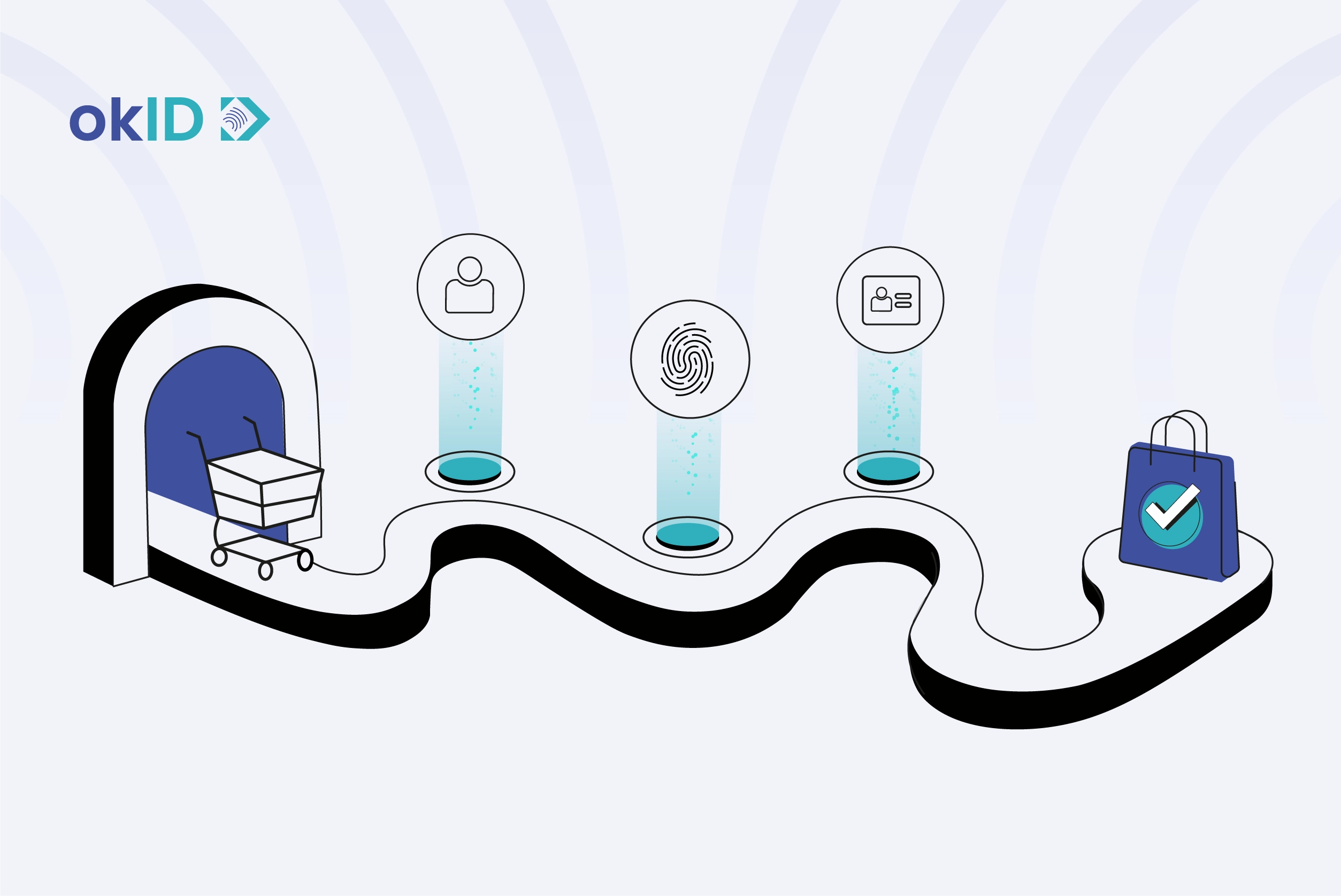
Transaction scoring, device signals, or payment checks alone cannot solve some fraud risks. That happens when the real question is not “Is this transaction risky?” but “Can we trust the person behind this action?”
You may need an identity layer when your business deals with:
- Fake accounts or high-risk onboarding
- Age-restricted purchases
- Suspicious refunds or returns
- Marketplace seller verification
- Regulated or KYC-style customer journeys.
For example, a fraud prevention platform may flag a suspicious high-value order, but it may not confirm whether the buyer is a real person using a valid identity. A marketplace may detect risky seller behaviour, but still needs document or biometric checks before allowing payouts. An age-restricted ecommerce store may need age verification before checkout or fulfilment.
Here, OKID can complement the main fraud prevention platform. okID supports identity checks through OCR, MRZ reading, AI, biometrics, NFC, and fraud detection, helping businesses verify users when payment or device signals are not enough.
If the business needs a more complete verification process around risky users, restricted products, or compliance-sensitive flows, a KYC verification service can support the workflow without replacing the primary fraud tool.
The main idea is to use identity checks only when needed. Let low-risk users move through easily, and ask for extra verification only when it makes sense. This way, fraud prevention solutions and identity checks work together without hurting your sales.
How to Reduce Fraud Without Hurting Good Customers
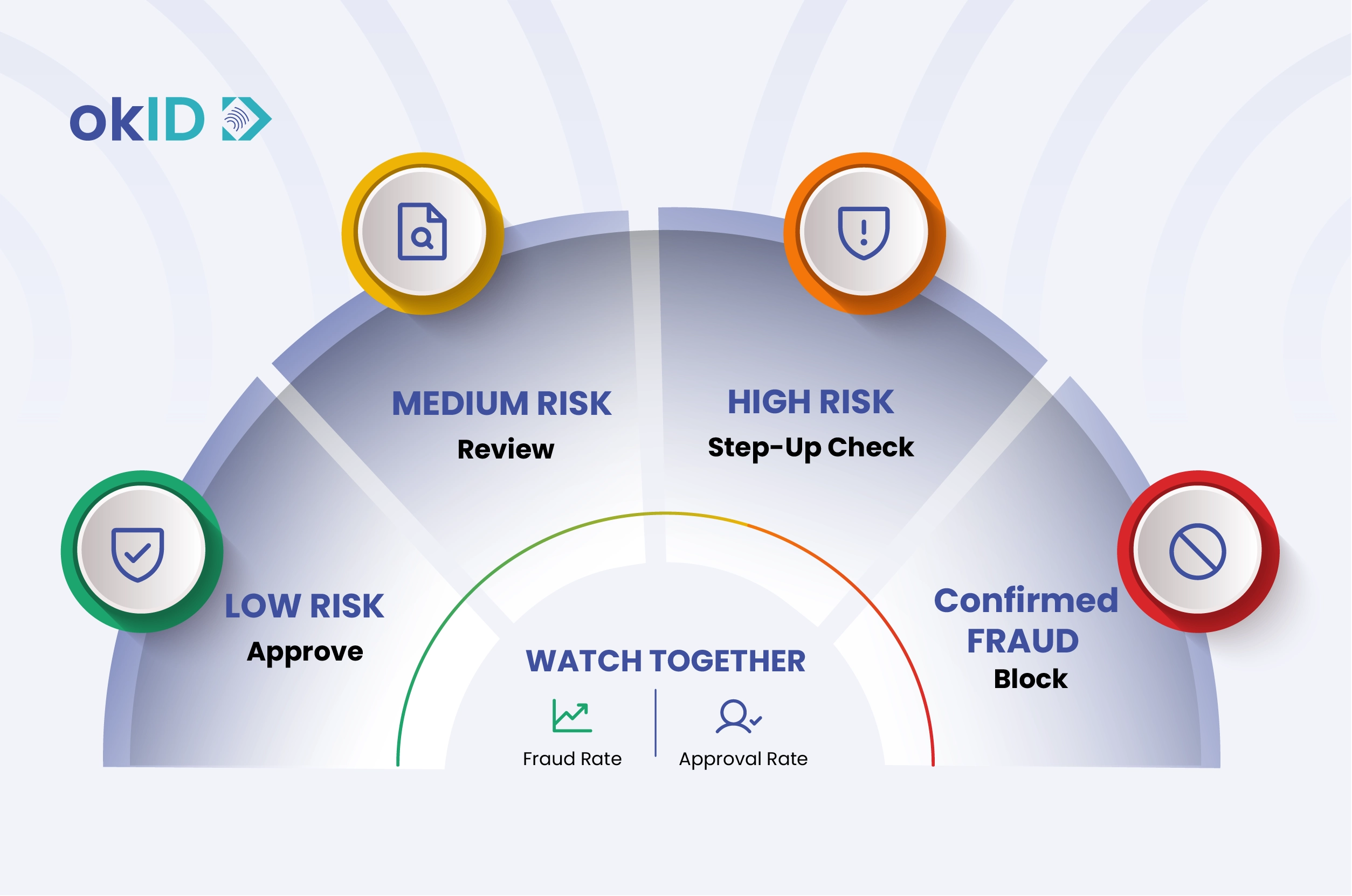
Once you pick a tool, how you set it up is important. Even the best platform can hurt your revenue if the rules are too strict or if you treat every customer as high risk.
“Security is always excessive until it’s not enough.”
Robbie Sinclair
It is the challenge for e-commerce teams: fraud controls need to be strong enough to stop real threats, but not so strict that they slow down good customers.
Use Risk-Based Checks Instead of One Rule for Everyone
Use different checks depending on the risk. Let returning customers with normal behaviour move through quickly. If a new customer places a big international order, review it more closely. This way, low-risk shoppers aren’t slowed down, and risky orders get extra attention.
Add Step-Up Verification Only When Necessary
Only use extra verification when there’s a clear risk. For example, a suspicious refund request or a big first order might need more proof, but a regular, low-risk purchase usually doesn’t.
Track Approval Rate Alongside Fraud Rate
If you see less fraud but also fewer approved orders, your tool might be too strict. Track fraud rate, approval rate, false declines, manual review time, chargebacks, and checkout abandonment together. The goal isn’t just fewer bad orders—it’s making better decisions overall.
Final Recommendation: Which E-Commerce Fraud Prevention Software Should You Choose?
Use this final summary after you identify your main fraud problem and decide how much control your team needs.
- OKID → Choose if your biggest fraud risk involves who the user is, not just how they behave.
- Riskified → Choose if you are a large merchant seeking higher approval rates and revenue recovery.
- Forter → Choose if you run an enterprise or marketplace needing real-time trust decisions.
- Sift → Choose if fraud involves accounts, behavioural risk, or activity before checkout.
- Kount → Choose if you need layered protection across payments, accounts, and loyalty programs.
- ClearSale → Choose if false declines are costly and you want AI plus human review.
- NoFraud → Choose if you want simple managed screening without a large fraud team.
- SEON → Choose if digital footprint and device signals are key to your fraud risk.
- Stripe Radar → Choose if you use Stripe and need lightweight built-in payment protection.
This summary helps merchants quickly find the right platform for their business and risk profile.
F&Q
1- What should I do if my store keeps getting high-risk orders?
Do not fulfil them automatically. Review customer history, billing and shipping mismatch, device signals, IP location, and order velocity. If this happens often, use a tool that can hold risky orders or trigger step-up verification before fulfilment.
2- Is built-in fraud protection enough for an e-commerce store?
It can be enough for low-risk, payment-based fraud. If you see repeat chargebacks, fake accounts, refund abuse, or high-value suspicious orders, you need a dedicated fraud prevention platform with stronger account and behavioural signals.
3- Should I choose chargeback protection or account fraud detection?
Choose chargeback protection for checkout fraud and payment disputes. Choose account fraud detection if fraud starts before checkout, such as fake accounts, suspicious logins, loyalty abuse, or repeat refund behaviour.
4- How do I stop fraud without blocking good customers?
Use risk-based checks. Let trusted customers move quickly, review unusual orders, and challenge only high-risk users. Track approval rate alongside fraud rate to avoid blocking legitimate buyers.
5- When should I add identity verification to e-commerce fraud prevention?
Add identity verification when risk depends on who the user is, not just the payment. This matters for age-restricted products, marketplace sellers, high-value first orders, suspicious refunds, account recovery, and regulated flows.
6- Can fraud prevention software verify a customer’s identity?
No. Most fraud prevention platforms focus on transaction risk, device intelligence, behavioural signals, and payment activity. Identity verification tools confirm whether the user is a real person and whether their identity information is valid.
7- What’s the difference between fraud detection and identity verification?
Fraud detection evaluates risk based on behaviour, transactions, and patterns. Identity verification confirms that the person behind an account or transaction is genuine. Many businesses use both together because they solve different problems.
8- Do e-commerce businesses need both fraud prevention and identity verification?
Not always, but many growing businesses benefit from combining both. Fraud prevention helps identify risky activity, while identity verification helps confirm user legitimacy during onboarding, account recovery, marketplace registration, or regulated transactions.