

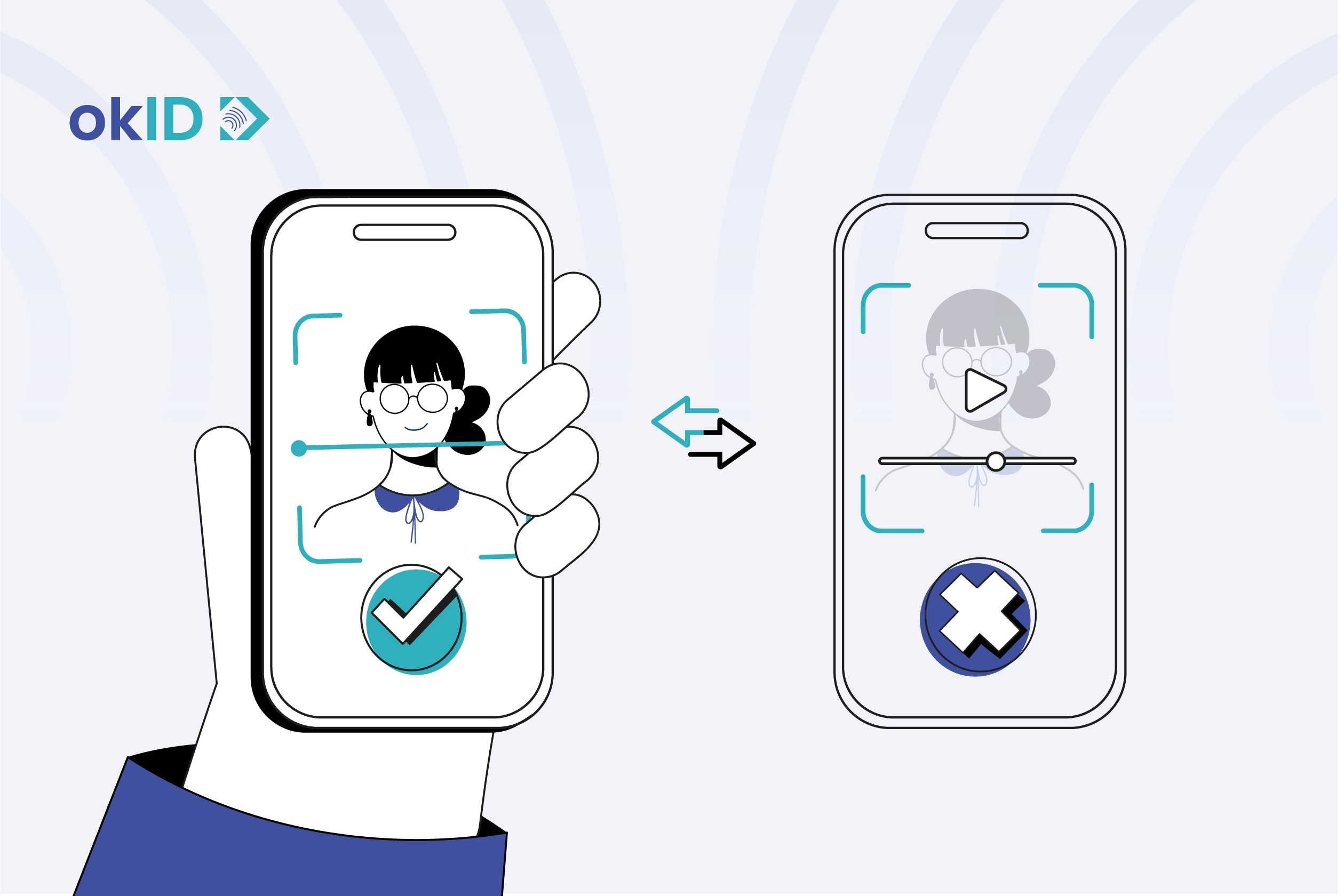
A fraudster no longer needs to walk into a branch. They do not even need a real face.
They may use a stolen ID, a selfie pulled from social media, a screen recording, or an AI-generated face that looks convincing enough to pass a weak check.
For banks, fintech platforms, crypto exchanges, marketplaces, and any business that handles remote onboarding, this raises a difficult question. How do you let real customers in quickly while keeping out fake users?
That balance is harder than it sounds. Add too much friction, and good users leave. Make the process too light, and fraud finds a way through.
This is why liveness detection has become such an important part of modern identity verification, not as a small technical feature, but as one of the trust layers that help businesses determine who is behind the screen.
What Is Liveness Detection?
Liveness detection is a biometric security method that verifies whether a person is physically present during an identity verification session. In simple terms, facial liveness detection checks whether the face captured during verification belongs to a real, live person rather than a photo, video, mask, or AI-generated face.
So face matching answers one question: Does the selfie match the ID photo? Liveness detection answers another: Is this a real person in front of the camera right now?
Liveness detection in biometrics solves this problem by confirming that a live human being provides the biometric sample at the moment of capture. Fraudsters increasingly rely on photos, videos, deepfakes, and synthetic identities to bypass remote onboarding processes. For OKID, liveness detection is not a standalone technology. It is one layer within a broader identity verification workflow that may include OCR, NFC verification, face matching, fraud detection, and KYC checks.
How Does Liveness Detection Work?
Liveness detection works by analyzing a face capture to confirm that it is from a real person physically present during the verification session, not from a photo, video, a mask, a screen replay, a deepfake, or other spoofing attempts.
In a typical identity verification workflow, the process includes several connected steps:
1. The User Starts the Verification Process
The user begins the verification flow by capturing an identity document, taking a selfie, recording a short video, or completing a combination of these steps. The exact process depends on the platform’s risk level, compliance requirements, and security settings.
2. The System Checks for Real Human Presence
The system analyzes the face capture for signals that indicate a live person is present. In passive liveness detection, this happens automatically in the background without asking the user to perform any action. In active liveness detection, the user may be asked to blink, turn their head, smile, or follow an on-screen instruction.
3. Supporting Identity Signals Are Verified
Liveness detection is usually combined with other identity verification checks. These may include document authenticity checks, OCR data extraction, NFC chip reading for supported identity documents, face matching, device intelligence, session analysis, and fraud indicators.
4. Identity and Risk Data Are Compared
The selfie or face capture may be compared with the photo on the identity document to confirm that the person matches the claimed identity. At the same time, device, behavior, and session signals can be reviewed to detect suspicious patterns, such as replay attacks, virtual cameras, or repeated failed attempts.
5. The Verification Result Is Returned
Finally, the platform returns a verification decision. A face liveness detection check confirms that a real user is present, while face matching or face authentication helps confirm that the person is the rightful owner of the identity being presented.
What Is Liveness Detection in Face Recognition?
In face recognition, liveness detection adds a security layer before or alongside face matching. Face recognition compares one face with another, while liveness detection checks whether the submitted face is live and physically present. Together, they help businesses verify both identity ownership and the presence of real users.
Why Has Liveness Detection Become Essential for Identity Verification?
So, what is liveness detection, and why do we need it? Businesses need it because remote identity checks are exposed to spoofing attempts such as printed photos, replayed videos, deepfakes, and synthetic identities.
Remote onboarding has accelerated customer acquisition but has also created new opportunities for fraud.
A few years ago, attackers often relied on stolen documents or printed photos. Today, they can use AI-generated faces, replay attacks, deepfakes, and synthetic identities that appear legitimate at first glance. This shift is already changing the fraud landscape. Deloitte’s Center for Financial Services predicts that generative AI could increase fraud losses in the United States to $40 billion by 2027, up from $12.3 billion in 2023.
For businesses, the challenge is not just preventing fraud. It is preventing fraud without creating a frustrating onboarding experience. Without effective liveness detection, organizations may face:
- Fake Accounts Created At Scale
- Higher Account Takeover Risk
- Increased Manual Reviews
- Compliance Challenges
- Lower Customer Trust
The impact extends beyond security. Fraud increases operational costs, slows onboarding, and can reduce conversion rates. That is why liveness detection has become both a security and business priority.
What Types of Fraud Can Liveness Detection Help Prevent?
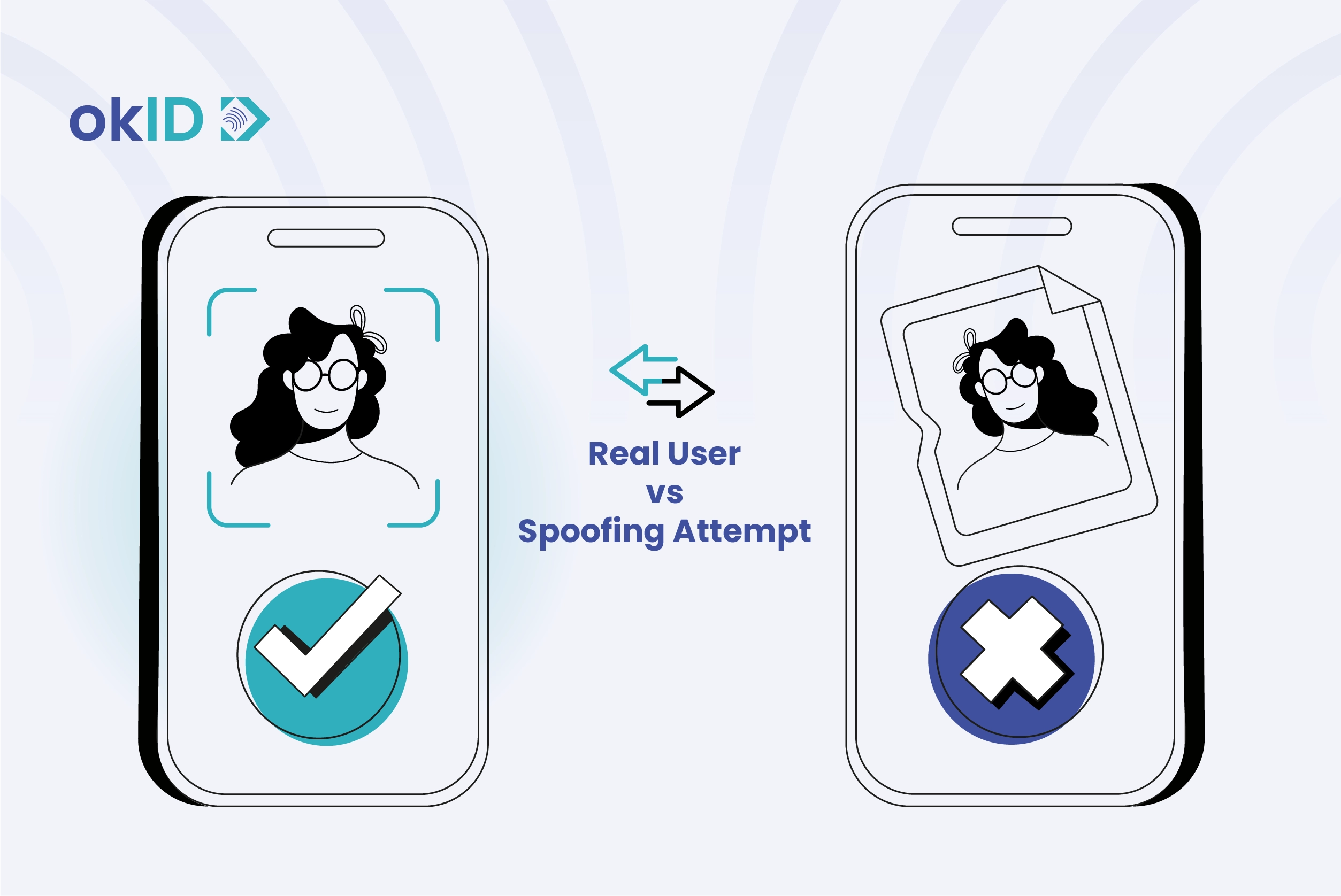
Liveness detection helps businesses detect presentation attacks, in which someone tries to fool a biometric system by presenting a fake face, such as a printed photo, replayed video, a mask, or a deepfake.
Printed Photo Fraud
One of the oldest attacks involves presenting a printed image of another person to the camera. While simple, these attacks can still be effective against weak verification systems. In 2023, Which? reported that its lab tests had found 19 out of 48 new smartphones could be unlocked with a printed 2D photograph of the phone owner. The finding explains why systems that rely solely on basic face recognition may struggle to distinguish a real user from a flat image.
Replay Attacks
Replay attacks use pre-recorded videos instead of live interactions. An attacker may present a previously captured selfie video and attempt to pass verification without being physically present.
Deepfake Impersonation
Deepfakes have become one of the fastest-growing threats to digital identity. AI-generated faces can mimic natural expressions and movements, making basic verification methods less reliable. According to the World Economic Forum, fraudsters used AI-generated deepfakes in a video call in early 2024 to impersonate senior managers at Arup. The employee believed the call was real and transferred $25 million to the criminals.
Synthetic Identity Fraud
Synthetic identities combine real and fabricated information to create entirely new personas. Fraudsters may use genuine data points alongside AI-generated faces to build identities that appear legitimate.
Account Takeover Fraud
Liveness detection is also useful after onboarding. During password resets, account recovery, or sensitive transactions, businesses can use liveness checks to verify that the legitimate account owner is present.
How Is Liveness Detection Used Across Different Industries?
Any business that verifies users remotely can benefit from liveness detection, but the use cases vary by industry:
- In banking and fintech, face authentication service supports account opening, KYC compliance, and transaction verification.
- In crypto, it helps reduce fake accounts, identity abuse, and high-risk withdrawal fraud.
- E-commerce platforms and marketplaces use liveness detection for seller verification, account recovery, and age-restricted purchases.
- In travel and hospitality, it supports remote check-in, guest onboarding, and account protection.
What Are the Different Types of Liveness Detection?
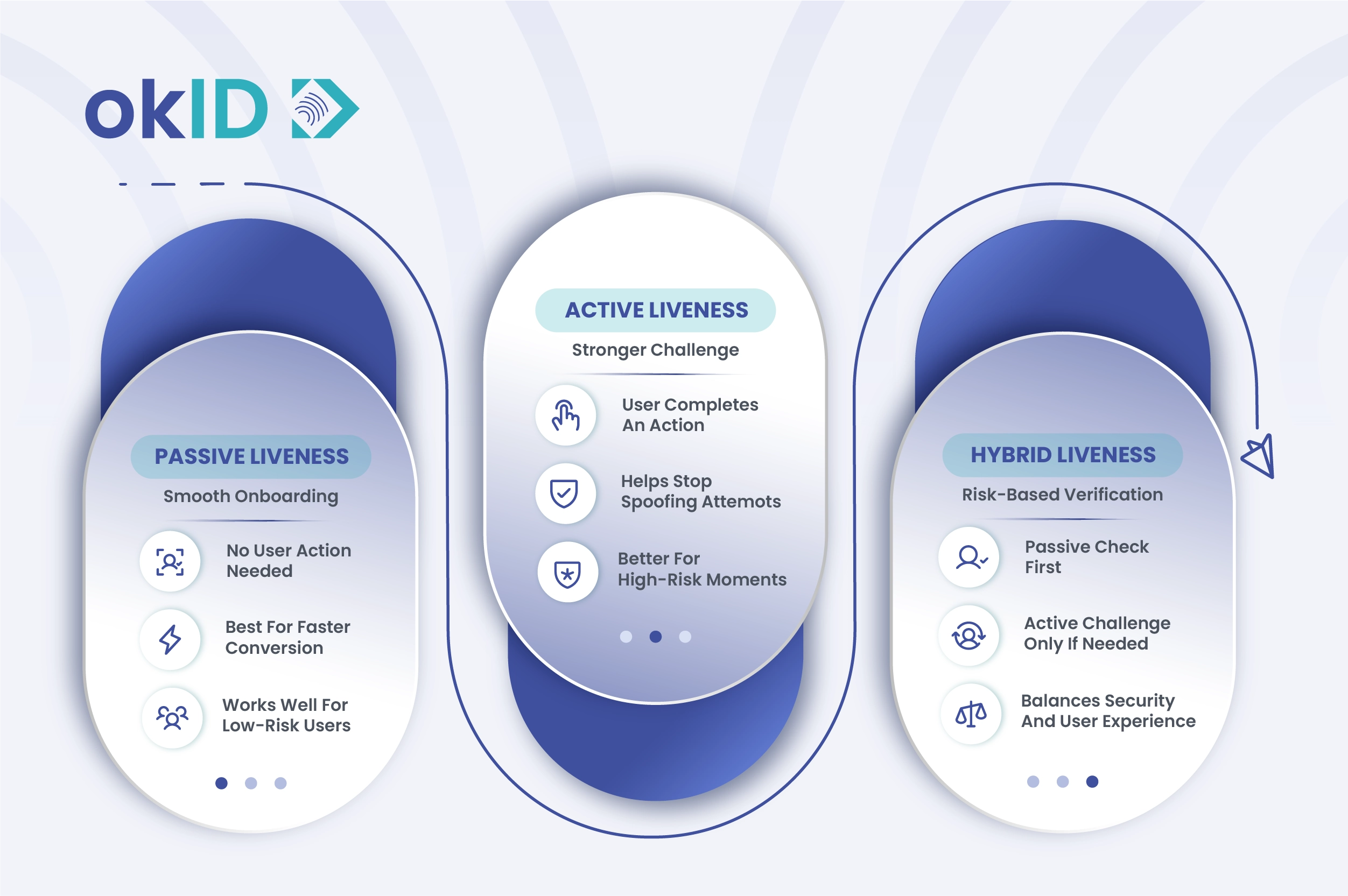
Most solutions fall into three categories: active, passive, and hybrid.
Active Liveness Detection
Active liveness requires users to act as verification. Some examples include:
- Blinking
- Smiling
- Turning The Head
- Following On-Screen Prompts
Because the user actively responds, this method can provide strong assurance. However, it can also introduce friction and increase failure rates for genuine users.
Passive Liveness Detection
Passive liveness works in the background without requiring specific actions. Instead, the system analyzes image quality, depth cues, facial characteristics, lighting patterns, and other indicators to determine whether the capture is genuine. Because the experience feels effortless, passive liveness is often preferred for high-volume onboarding.
Hybrid Liveness Detection
Hybrid liveness combines passive analysis with active checks when additional confidence is needed. For example, the system can verify a low-risk user in the background, while asking a higher-risk user to complete one extra step.
This approach balances security and user experience, making it attractive for regulated industries.
OKID employs a hybrid liveness detection approach that combines passive biometric analysis with optional active liveness challenges. It allows businesses to keep the verification flow smooth for most users while adding an extra layer of assurance when the risk level is higher. According to OKID’s documentation, the Liveness Module supports active and passive liveness, as well as face matching, as part of the verification setup.
How Do You Choose the Right Type of Liveness Detection?
The right type of liveness detection depends on your risk level, user experience goals, and compliance requirements. The best liveness detection software is not simply the one with the strongest check; it is the one that balances fraud protection, conversion, compliance, accessibility, and user experience for your specific risk level.
| Business Goal | Best Fit |
| Faster onboarding and higher conversion | Passive Liveness Detection |
| Stronger protection against spoofing attacks | Active Liveness Detection |
| Balancing security and user experience | Hybrid Liveness Detection |
| Regulated KYC onboarding | Hybrid Or Active Liveness Detection |
| Account recovery and sensitive actions | Active Or Hybrid Liveness Detection |
As a general rule, passive liveness works best when speed and conversion matter most. Active liveness is better suited to higher risk scenarios, while hybrid liveness offers a balance between security and usability.
Many businesses ultimately adopt a risk-based approach, adjusting verification requirements based on user, transaction, and fraud signals rather than relying on a single method for every situation.
Where Does Liveness Detection Fit Within an Identity Verification Workflow?
Liveness detection is one component of a broader identity verification process. A typical workflow includes:
| Step | What It Checks | Why It Matters |
| Document Capture | Document quality and validity | Creates a reliable starting point |
| OCR Extraction | Identity data from the document | Reduces manual entry |
| NFC Verification | Chip-based document validation | Improves document trust |
| Face Matching | Selfie compared with ID photo | Confirms identity ownership |
| Liveness Detection | Real user presence | Helps prevent spoofing attacks |
| Fraud Analysis | Risk signals across the session | Supports better decisions |
It shows how modern platforms operate. The okid verification platform combines these capabilities to help businesses improve security, compliance, and onboarding efficiency within a single workflow. So, Liveness detection becomes far more effective when combined with other identity verification technologies.
What Challenges Should Businesses Expect With Liveness Detection?
Liveness detection is very effective, but businesses should understand its limitations. These challenges do not reduce the value of liveness detection. They highlight the importance of selecting solutions that balance security, usability, and compliance. The best systems minimize friction while maintaining strong fraud protection. Important challenges include:
- False Rejections Of Legitimate Users
- Poor Lighting Conditions
- Low Quality Cameras
- Accessibility Concerns
- Increased Friction In Active Flows
- Rapidly Evolving Deepfake Techniques
- Privacy And Data Protection Requirements
How Will Liveness Detection Evolve in the Age of AI-Generated Fraud?
Identity fraud is evolving rapidly, and liveness detection is evolving alongside it. Future solutions will rely less on isolated checks and more on multiple layers of intelligence working together. Some trends are already shaping the market:
- More Passive Verification Experiences
- Adaptive Hybrid Flows Based On Risk
- Stronger Deepfake Detection
- Improved Detection Of Injection And Virtual Camera Attacks
- Greater Use Of Device and Behavioral Signals
- Tighter Integration With KYC And Fraud Engines
The future is unlikely to be defined by a single technology. Instead, success will come from combining different signals to create a verification process that feels simple for legitimate users and difficult for fraudsters.
Conclusion
Liveness detection has become a critical component of modern identity verification. As deepfakes, replay attacks, synthetic identities, and account takeover attempts become more sophisticated, businesses need stronger ways to confirm that a real person is present during onboarding and high-risk interactions.
For businesses building digital onboarding journeys, the question is no longer whether liveness detection is necessary. The question is how to implement it in a way that improves security, supports compliance, and maintains a smooth customer experience.
FAQs
1- Why Do Legitimate Users Sometimes Fail a Liveness Check?
Poor lighting, camera quality, internet issues, or incorrect positioning can cause failures, even when the user is genuine.
2- Can Deepfakes Pass Modern Liveness Detection Systems?
Some advanced deepfakes may bypass basic checks. This is why organizations often combine liveness detection with face matching, fraud analysis, and document verification.
3- Is Liveness Detection Enough to Prevent Identity Fraud?
No. It confirms presence, but it should be combined with document verification, face matching, and fraud prevention tools.
4- What Is the Difference Between Deepfake Detection and Liveness Detection?
Liveness detection verifies human presence, while deepfake detection focuses on identifying AI-generated or manipulated content.
5- Can Liveness Detection Be Used After Customer Onboarding?
Yes. Many organizations use it during account recovery, password resets, and other high-risk actions.
6- Does Liveness Detection Require Businesses to Store Biometric Data?
Not always. Storage requirements depend on the provider, regulatory obligations, and privacy policies.
7- Why Are More Businesses Moving Toward Passive Liveness Detection?
Passive liveness reduces onboarding friction by enabling verification with minimal user interaction while maintaining strong security.
