
Check Customer Age Instantly with a Live Selfie
Confirm age thresholds with a live selfie without requiring an identity document upfront. Clear cases continue quickly, while uncertain users move to stronger verification.
- Selfie-based age checks
- Liveness and spoof detection
- Configurable decision workflows
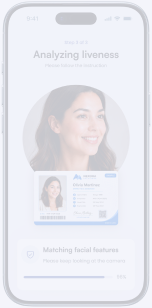
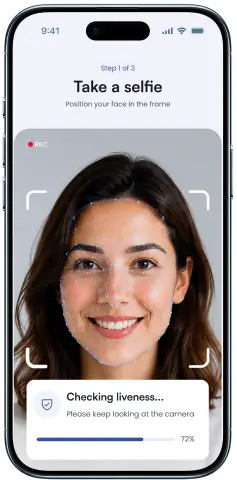
Age Check Passed
The user is estimated to be 18 or older







Privacy-First Age Estimation Software for Digital Journeys
okID helps digital platforms make faster age decisions while reducing unnecessary document checks and supporting more consistent age assurance workflows.

Keep Underage Users Out Without Creating Friction
Simple age gates are easy to bypass, while requiring an identity document from every user creates unnecessary friction.

Self-Declared Age Can Be Easily Bypassed
Users can enter a false date of birth or click an “18+” gate to access restricted services.
- False date of birth
- “18+” click-through gates
- No identity verification

Deepfakes Can Bypass Weak Age Checks
Printed photos, screen replays and deepfakes can bypass selfie checks without effective liveness detection.
- Printed photo attacks
- Screen replay attempts
- Synthetic face presentations

Borderline Ages Need More Than a Guess
Users close to the age threshold should move to additional verification instead of being automatically approved or rejected.
- Near-threshold users
- Uncertain age estimates
- Additional verification required

Go from Selfie to Age Decision in Four Steps
Add a quick, guided selfie check to your customer journey and use the result based on your age requirements.
Take a Live Selfie
Users simply take a quick selfie with their smartphone. No ID documents, app downloads, or lengthy forms are required.
AI Age Estimation
okID instantly estimates the user's age and performs a real-time liveness check to ensure a genuine person is present.
Safety Threshold
The estimated age is checked against the required age limit and a configurable safety margin. If the user is safely above the threshold, verification is complete. This is all it takes for 97% of users.
Extra Check (If Needed)
Only the 3% of users with borderline results need a second verification step. They can choose their preferred method: ID scan, iDIN, or itsme.

Confident Age Checks Without Upfront ID
Give clear cases a simpler route while keeping stronger identity evidence available for users who require additional review.
Selfie-First Experience
Let users begin with a guided live selfie instead of immediately uploading an identity document.
Configurable Age Thresholds
Apply minimum-age rules that align with your products, services and operating markets.
Liveness and Spoof Resistance
Identify common presentation attacks and manipulated inputs before relying on a selfie-based result.
Fast Decisioning
Return the supported result quickly enough to keep onboarding, sign-up and age-gated actions moving.
Data Minimization
Collect only the information required for the configured check and apply documented processing and retention controls.
Step-Up Verification
Route borderline or higher-risk users to a document or identity check instead of adding the same friction to every journey.

Add the Right Assurance Level to Every Age Check
Combine selfie-based screening with liveness, document and biometric checks to create the right level of assurance for each user.
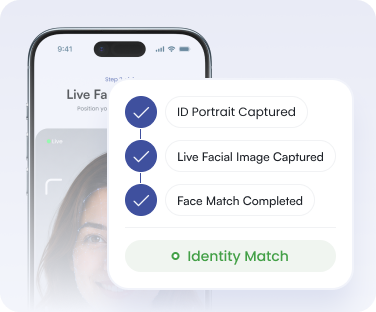
Confirm that the facial input comes from a real, present user and strengthen protection against photos, screens, replays and other presentation attacks.
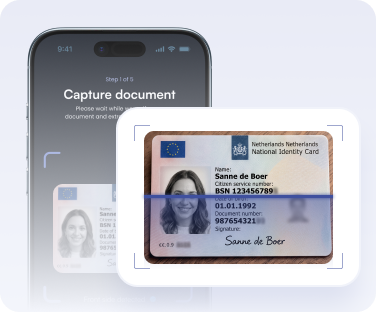
Request higher-assurance evidence when a user falls close to the threshold or when your policy requires document-backed proof.
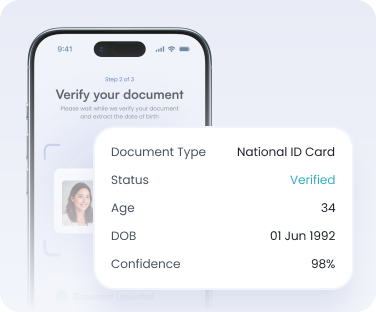
When a document fallback is required, compare the live user with the portrait on the identity document presented.

Add Selfie-Based Age Checks to Your Existing Verification Flow
Choose where the age check appears, how users complete it and how your system tracks the verification outcome.
Place the check before document verification, within onboarding, at an age-gated action or when additional assurance is required.

 REST API integration
 Hosted verification flows
 Modal or iframe integration
 Mobile or WebView support

- Before document verification
 Inside an onboarding journey
 At an age-gated action
 As a step-up trigger


Protect Facial Data Throughout the Age Estimation Process
Facial processing requires clear safeguards, particularly when a journey may involve younger users. okID supports privacy and security practices designed to limit unnecessary collection, protect sensitive information and keep decision validation on the server side.
 Data and Consent Controls
- Secure Processing
- Server-Side Validation




Age Assurance for High-Risk and Regulated Platforms
Introduce a lower-friction age signal at the right point in regulated onboarding, restricted access and digital transaction journeys.

Screen users for minimum-age access before or alongside higher-assurance player identity verification.

Reduce underage participation and support safer access to age-restricted communities and platform features.
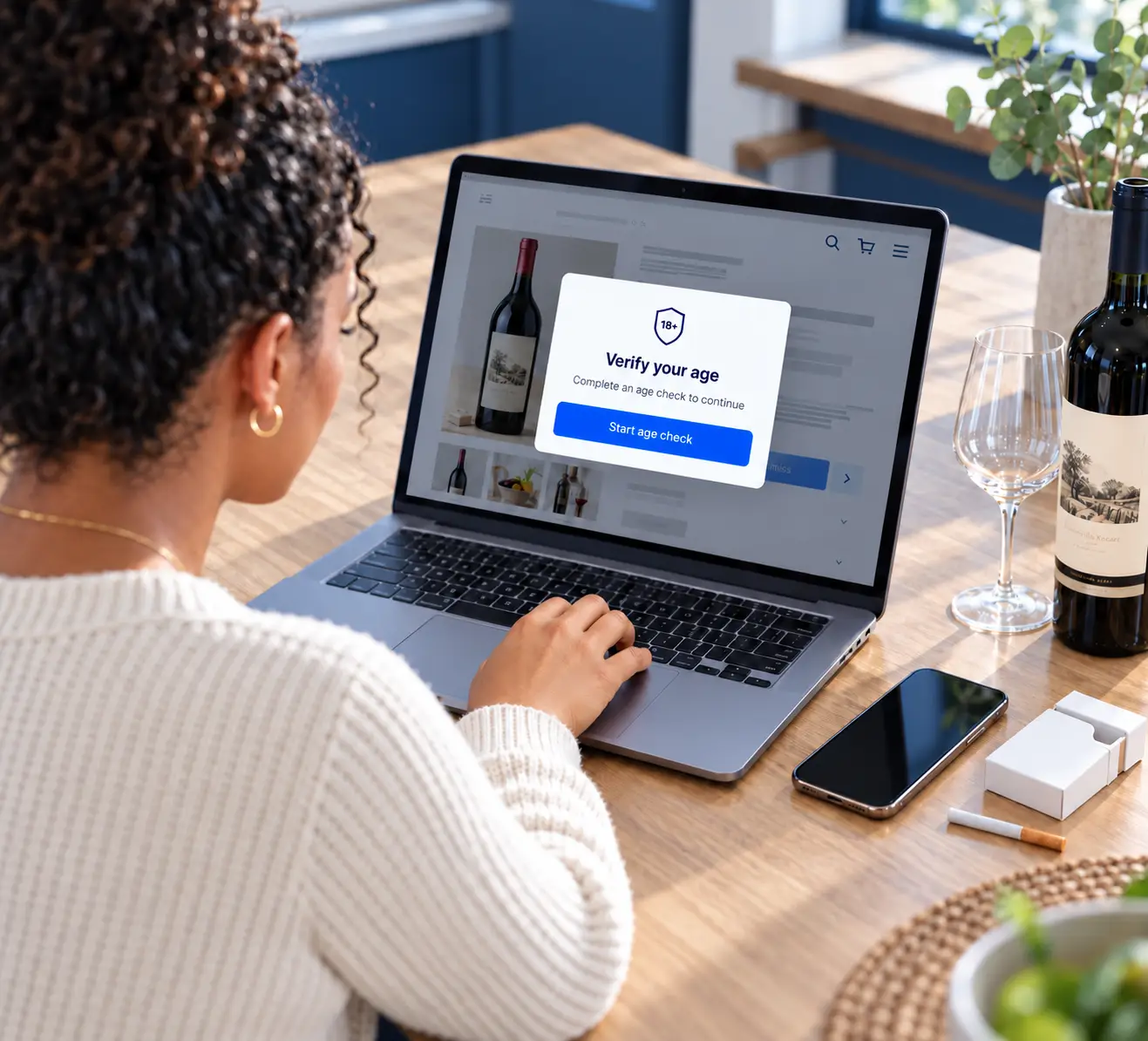
Add age gates before users access restricted products, seller features or regulated transactions.

Screen for minimum-age eligibility before moving users into higher-assurance onboarding or KYC where required.

Age Assurance for High-Risk and Regulated Platforms
Introduce a lower-friction age signal at the right point in regulated onboarding, restricted access and digital transaction journeys.
Screen users for minimum-age access before or alongside higher-assurance player identity verification.
Reduce underage participation and support safer access to age-restricted communities and platform features.
Add age gates before users access restricted products, seller features or regulated transactions.
Screen for minimum-age eligibility before moving users into higher-assurance onboarding or KYC where required.


Trusted Verification Experiences That Reduce User Friction


Age Estimation Questions for Product & Compliance Teams
Age Estimation Questions for Product and Compliance Teams
Still have a question? Ask a Question
Performance is assessed across relevant age and demographic groups, with particular attention to users near the configured threshold. Results also account for image quality, confidence policies and the population included in testing.
No. A selfie check can act as the first age signal. Users with uncertain results, higher risk or journeys requiring stronger evidence can be routed to a document-backed check.
Where supported by the final okID configuration, businesses can align decision rules with the requirements of different services, products or markets.
The workflow can apply a confidence buffer and route the user to additional verification instead of automatically allowing or rejecting them.
Liveness and input checks help identify common attacks such as printed photos, screen replays and manipulated facial media.
The available result depends on the approved okID configuration. It may include an age-related result, threshold decision, supported age band or confidence indicator.
Processing and retention follow okID’s documented privacy controls and the customer’s configured workflow. Exact retention periods, deletion options and processing locations depend on the approved product setup.
Yes. It can be positioned before document verification, within onboarding, at a restricted action or as a trigger for additional verification using okID’s documented integration options.
Not necessarily. Suitability depends on the jurisdiction, use case, required assurance level and applicable regulation. Some journeys may require stronger document or identity evidence.
Start Building a Smarter Age Assurance Journey
Use a live selfie as the first age signal and introduce stronger identity evidence only when your policies, risk rules or confidence requirements make it necessary.
Provided by Bluem, an independently audited ISAE 3402 Type II FinTech and RegTech service provider.