

Crypto Identity
Verification for Exchanges & Trading Platforms


Global Identity Coverage for
Crypto Platforms
okID crypto identity verification built by Dutch fintech Bluem, backed by trusted
European fintech expertise.

Solutions for Crypto
Identity Verification
Our solutions provide identity verification for crypto platforms throughout the
customer journey.
KYC Verification
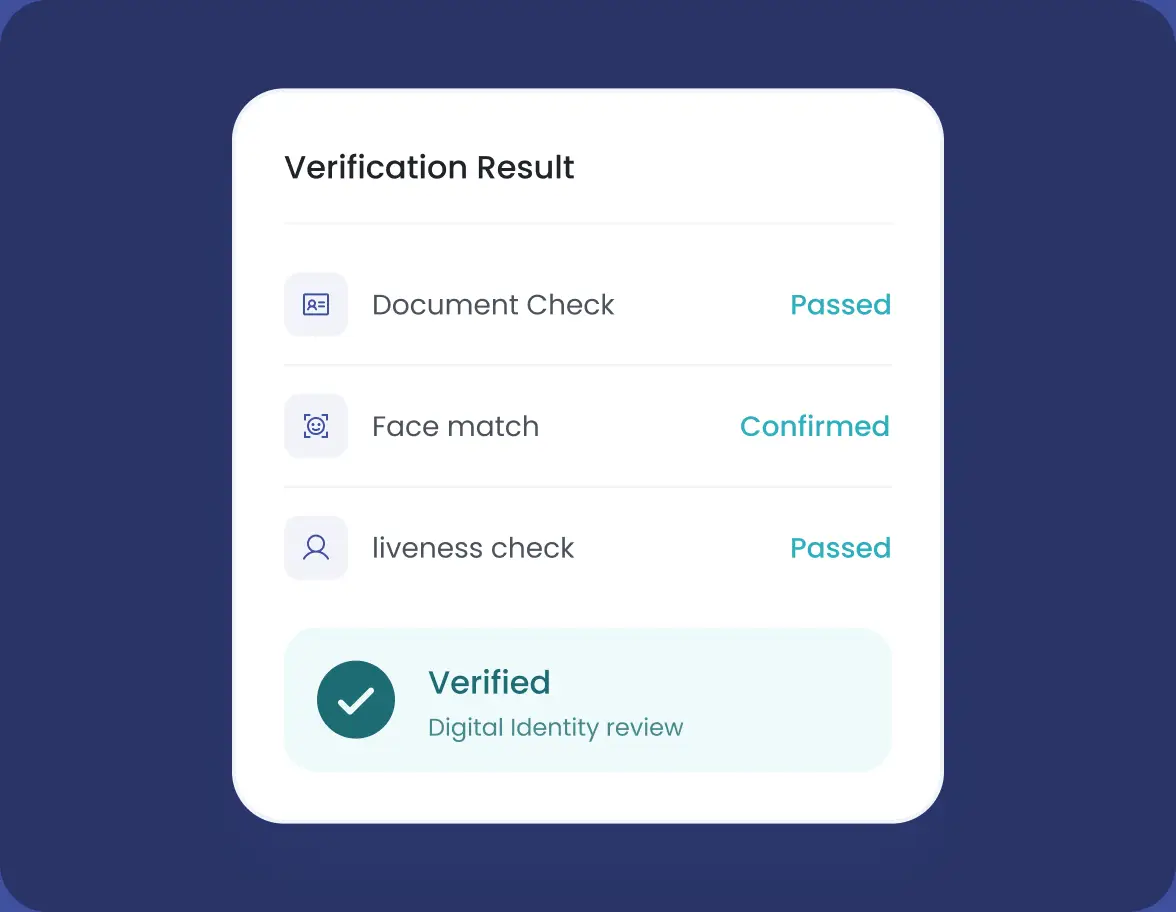
During signup, okID checks the user’s document, face, and liveness to support identity verification for crypto compliance and KYC onboarding.
Fraud Prevention
okID detects fake documents, stolen identities, spoofing, synthetic identities, and deepfakes to help prevent fraudsters from accessing the platform with a fake identity.
Digital Onboarding
Automates identity checks to help crypto platforms onboard legitimate users faster with less manual review.
Account Takeover Prevention
okID can verify the user’s identity again during account recovery, suspicious login attempts, or high-risk actions to ensure the person requesting access is the real account owner.

How crypto identity
verification Works
okID verifies Identity verification systems for crypto through simple 4-step
process:


1. User Starts Verification
The user starts the identity verification process through the exchange, wallet, or trading platform using a Hosted Flow or SDK.
2. Identity & Document Checks Run
okID collects the user’s identity information and documents, then checks that the documents are genuine and shows no signs of fraud.
3. Biometric & Fraud Checks Run
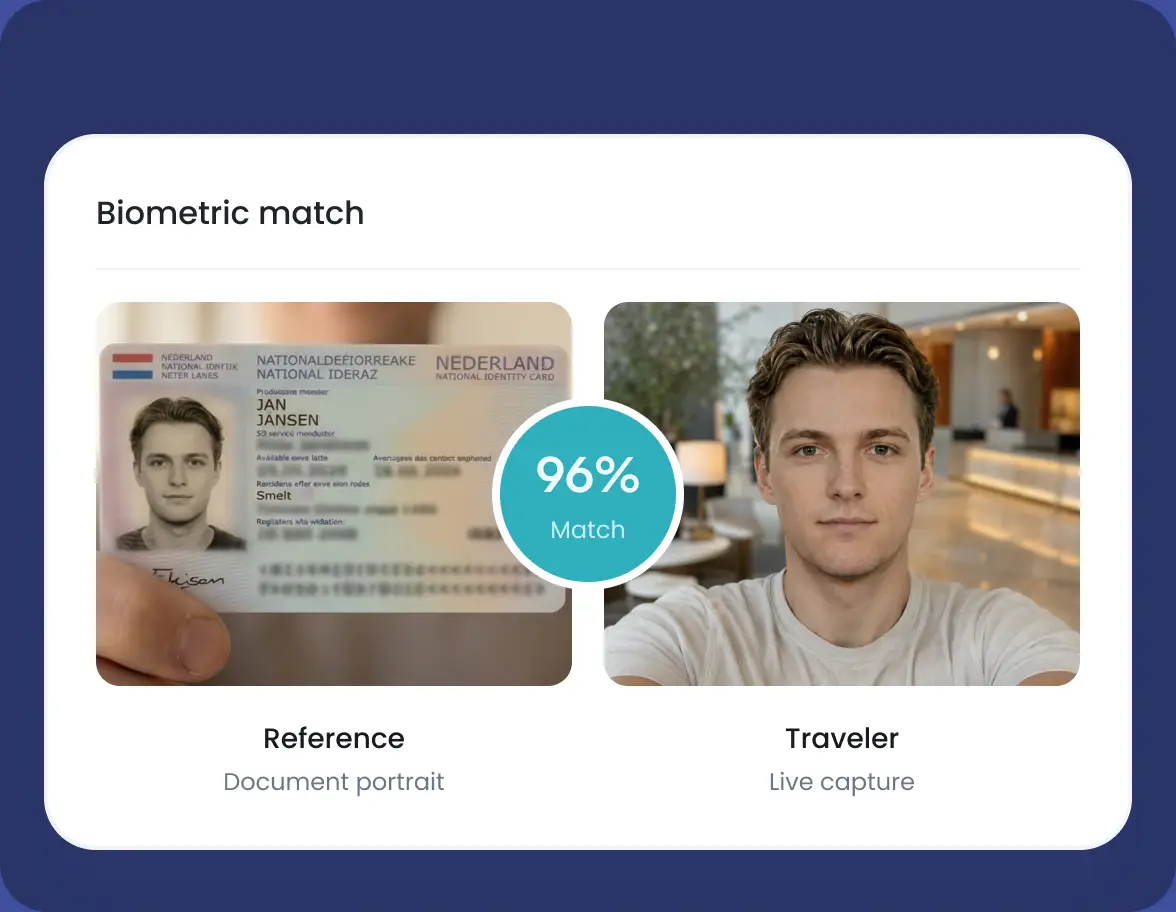
Our system compares the user’s face with the document photo, checks liveness, and detects signs of fraud at the same time.
4. Verification Results Return
okID returns the verification status, confidence score, and risk signals through API, webhook, or dashboard for the crypto platform to review.

Related Products for
Crypto Identity Verification
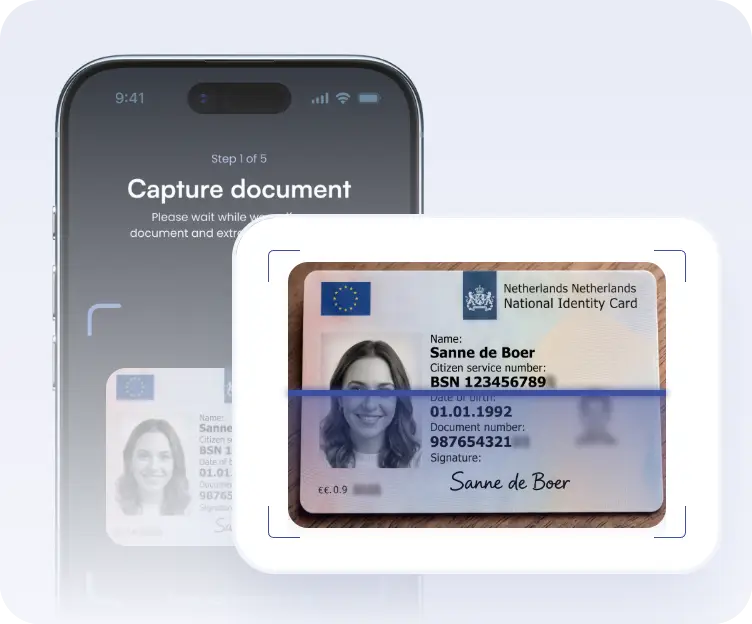
Validates crypto customer identity documents, extracts identity data, and detects forged or tampered documents.

Checks whether a facial sample comes from a real person physically present, rather than a photo or replay.

Matches the user’s selfie with their identity document to help prevent impersonation during crypto onboarding.

Verify customers through trusted eIDs and okID Wallet for faster KYC and secure onboarding.

FAQs About crypto
identity verification
Find answers about crypto identity verification with okID.
Still have a question? Ask a Question
How does identity verification for crypto compliance support KYC and MiCA-related onboarding?
Identity verification confirms that the person creating the account is who they claim to be. It supports the identity verification stage of KYC and MiCA-related onboarding by providing more reliable customer identity information.
Wich crypto identity verification checks should be used for different users and risk levels?
Crypto platforms can use different identity checks based on the user’s country, risk level, or stage in the journey. For example, signup can include document, face, liveness, NFC, or stolen-document checks. For account recovery or high-risk withdrawals, the user’s identity can be verified again.
How does digital identity verification for crypto detect stolen IDs, synthetic identities, and deepfakes?
okID uses layered identity and fraud checks instead of relying on a single signal. It checks document authenticity, matches the user’s face to the ID, uses liveness to detect photos, replay attacks and AI-generated faces, and adds device and fraud signals to identify suspicious patterns.
Can okID combine identity checks with sanctions, PEP and AML screening during crypto onboarding?
Yes, as part of a connected onboarding flow. okID can first verify the customer’s document, face, and liveness, then pass the identity results to additional AML checks connected through Bluem.
How quickly can exchanges and wallets verify legitimate users without increasing onboarding drop-off?
okID is designed to complete identity checks for legitimate users within a few minutes. Smart Document Capture helps prevent poor-quality document submissions, while document verification, face matching, and liveness checks run automatically and return the results through the platform integration.
Which identity documents and countries are supported for international crypto customers?
okID can verify users’ identity documents across more than 190 countries and supports over 15,000 document types. These include passports, national identity cards, driving licences, and residence permits.
Can identity verification systems for crypto integrate with an existing exchange, wallet, or trading platform through an API or SDK?
Yes. Crypto platforms can connect okID to their systems through an API or SDK and add identity verification to signup or account access flows. okID also supports Hosted Verification Flow and Webhooks, with SDKs available for JavaScript, Python, PHP, and Go.
What happens when a user fails a document, biometric, liveness, or AML check?
If a user fails one of the identity verification steps, okID sends the result and any risk signals to the platform. The platform then decides whether the user should verify their identity again or the case should be sent for further review.
How is identity and biometric data protected during crypto KYC verification?
okID processes and protects users’ identity and biometric data in line with GDPR requirements. For European identity verification, data is managed through infrastructure located in the Netherlands.
Faster Crypto Identity
Verification Without Slowing
Onboarding
Use document, face, and liveness checks to verify real users faster and reduce
identity fraud across your crypto platform.