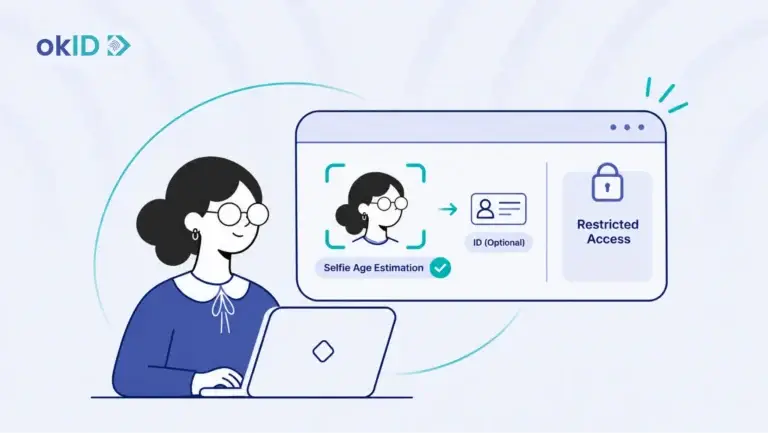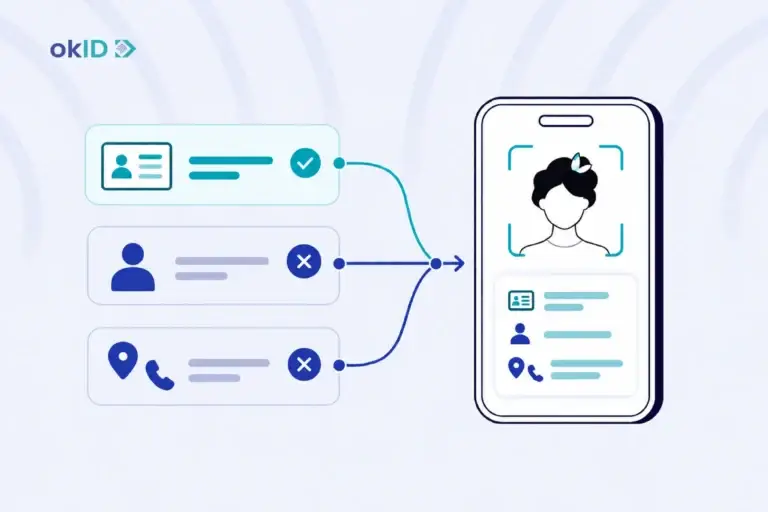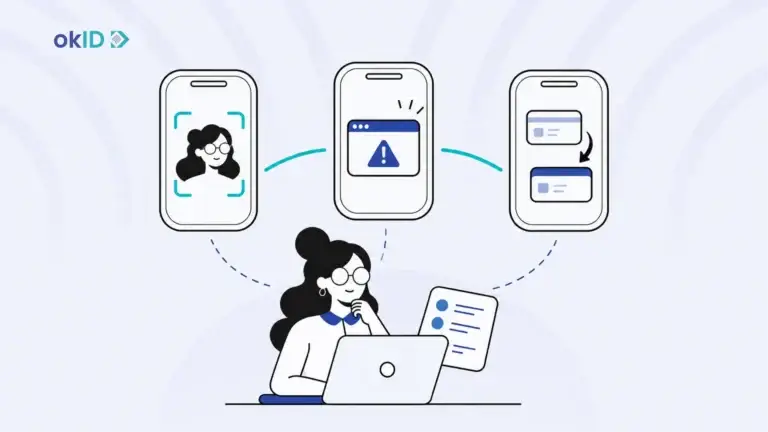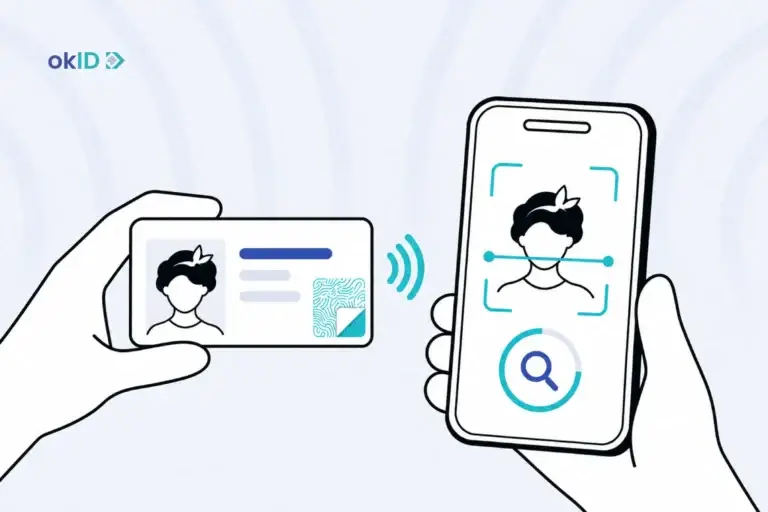
Digital identity trends are changing fast, and businesses can feel the pressure from every direction. Fraud is becoming harder to detect, customers expect faster onboarding, and compliance teams need stronger proof without adding unnecessary friction. What used to be a simple ID scan is now a strategic part of digital trust.
In 2026, leading digital identity verification trends focus on creating accurate, secure, privacy-conscious, and user-friendly verification journeys. For sectors like finance, insurance, travel, hospitality, real estate, and payments, these trends will define how businesses verify customers, prevent fraud, and support growth.
This article explores seven key identity verification trends in 2026 and explains what they mean for businesses.
Key Takeaways
- AI is making identity checks faster, smarter, and more scalable.
- Biometrics are becoming more advanced as fraud tactics evolve.
- Fraud detection is moving beyond one-time onboarding checks.
- Privacy, compliance, and user experience now need to work together.
- Unified platforms are replacing disconnected verification tools.
Why 2026 Marks a Turning Point for Digital Identity
The identity verification market is entering a more mature phase. Businesses are no longer looking only for basic document scanning. They need solutions that support fraud prevention, compliance, onboarding conversion, and operational efficiency within a single connected journey.
This shift is also reflected in market growth. Juniper Research reports that global spend on digital identity verification is expected to grow by 55% between 2026 and 2030, rising from just under $19 billion in 2026.
That growth matters because the pressure is not coming from one source. AI-generated fraud, synthetic identities, account takeover attempts, stricter regulations, and higher customer expectations are all forcing businesses to rethink how digital trust is built.
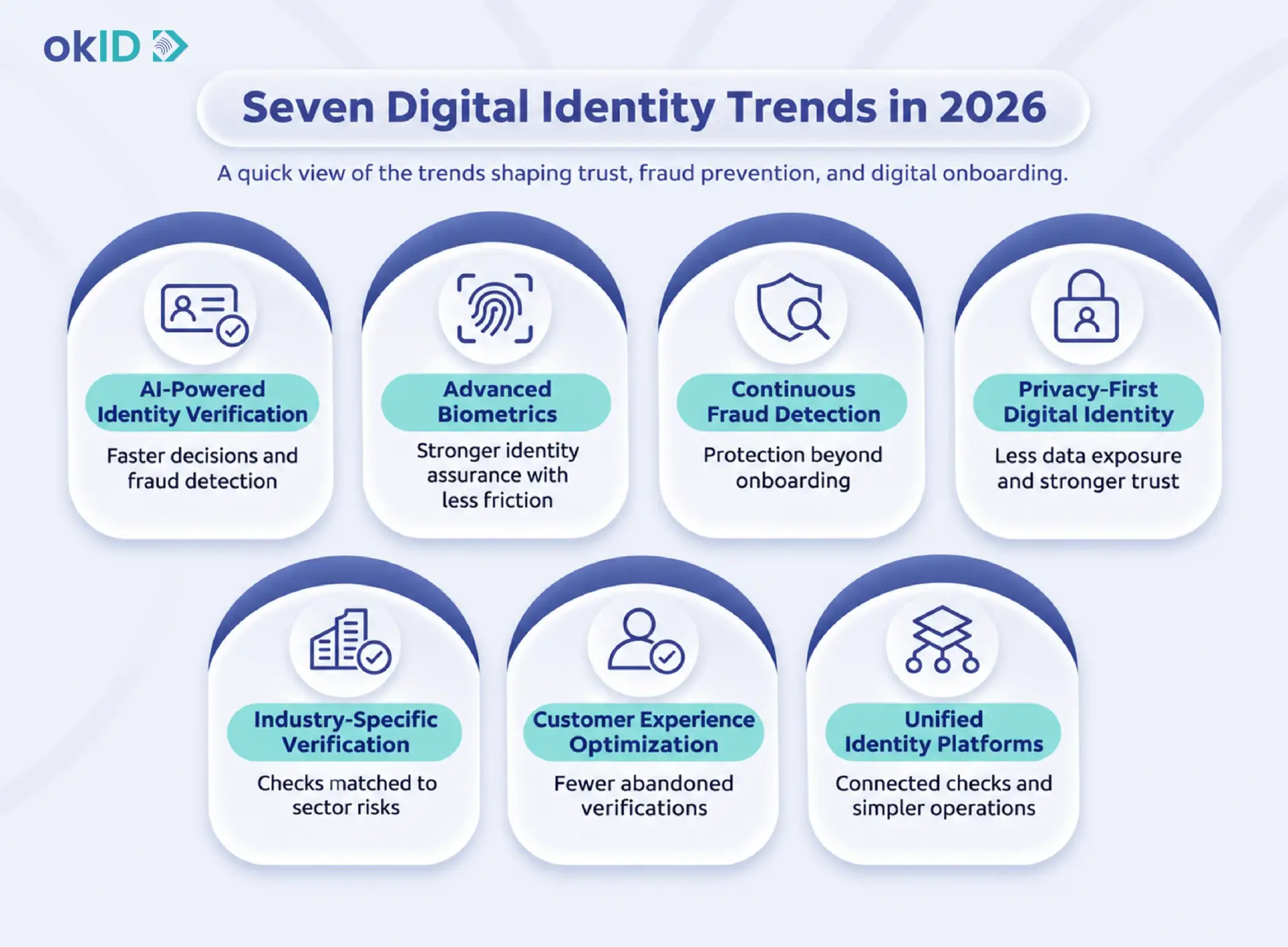
Quick Overview of the Top 7 Digital Identity Trends in 2026
The table below summarizes seven developments businesses should watch in 2026:
| Trend | Why It Matters |
|---|---|
| AI-Powered Identity Verification | Smarter decisions, faster reviews, and stronger fraud detection |
| Advanced Biometrics | Better identity assurance with less user friction |
| Continuous Fraud Detection | Protection beyond the first onboarding check |
| Privacy-First Digital Identity | Stronger trust and better regulatory readiness |
| Industry-Specific Verification | More relevant workflows for different business risks |
| Customer Experience Optimization | Higher conversion and fewer abandoned verifications |
| Unified Identity Platforms | Simpler operations and better scalability |
1. AI-Powered Identity Verification Becomes the New Standard
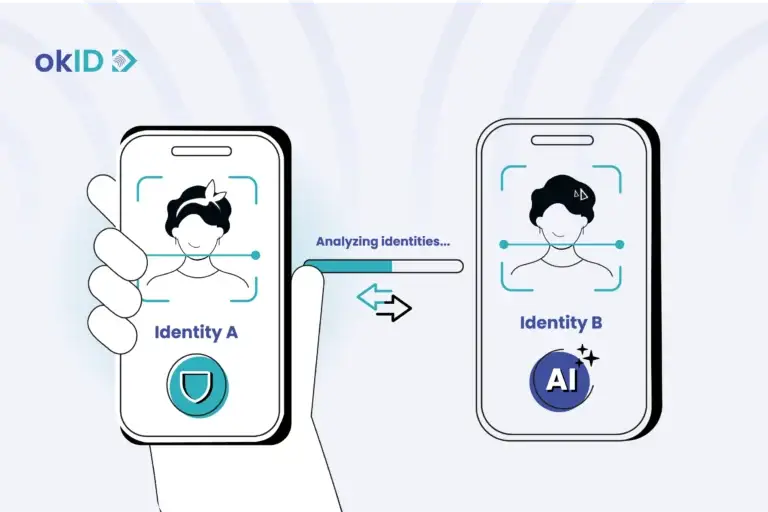
AI is one of the most important digital identity trends shaping 2026 because it changes how identity decisions are made. Instead of only automating manual tasks, AI can analyze documents, image quality, fraud signals, behavioral patterns, and verification outcomes at scale.
For businesses using an identity verification service, AI can reduce manual review while helping teams detect suspicious patterns more quickly. This is especially valuable when onboarding volumes are high or fraud attempts are becoming more sophisticated.
Why this trend matters
- Improves document data extraction
- Reduces manual review queues
- Flags suspicious verification patterns
- Supports faster digital onboarding
- Helps risk teams make more consistent decisions
Business impact: AI helps businesses verify more customers without slowing down the process for legitimate users. It also gives fraud teams better signals before risk turns into financial loss.
2. Advanced Biometrics Move Beyond Basic Face Matching
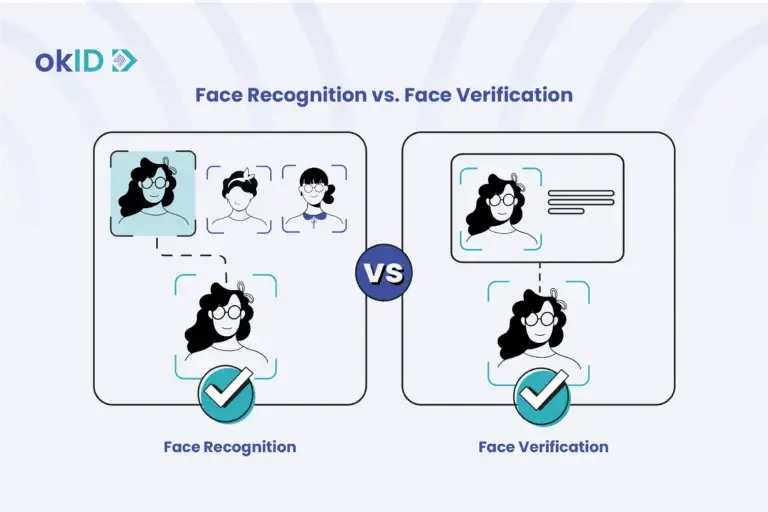
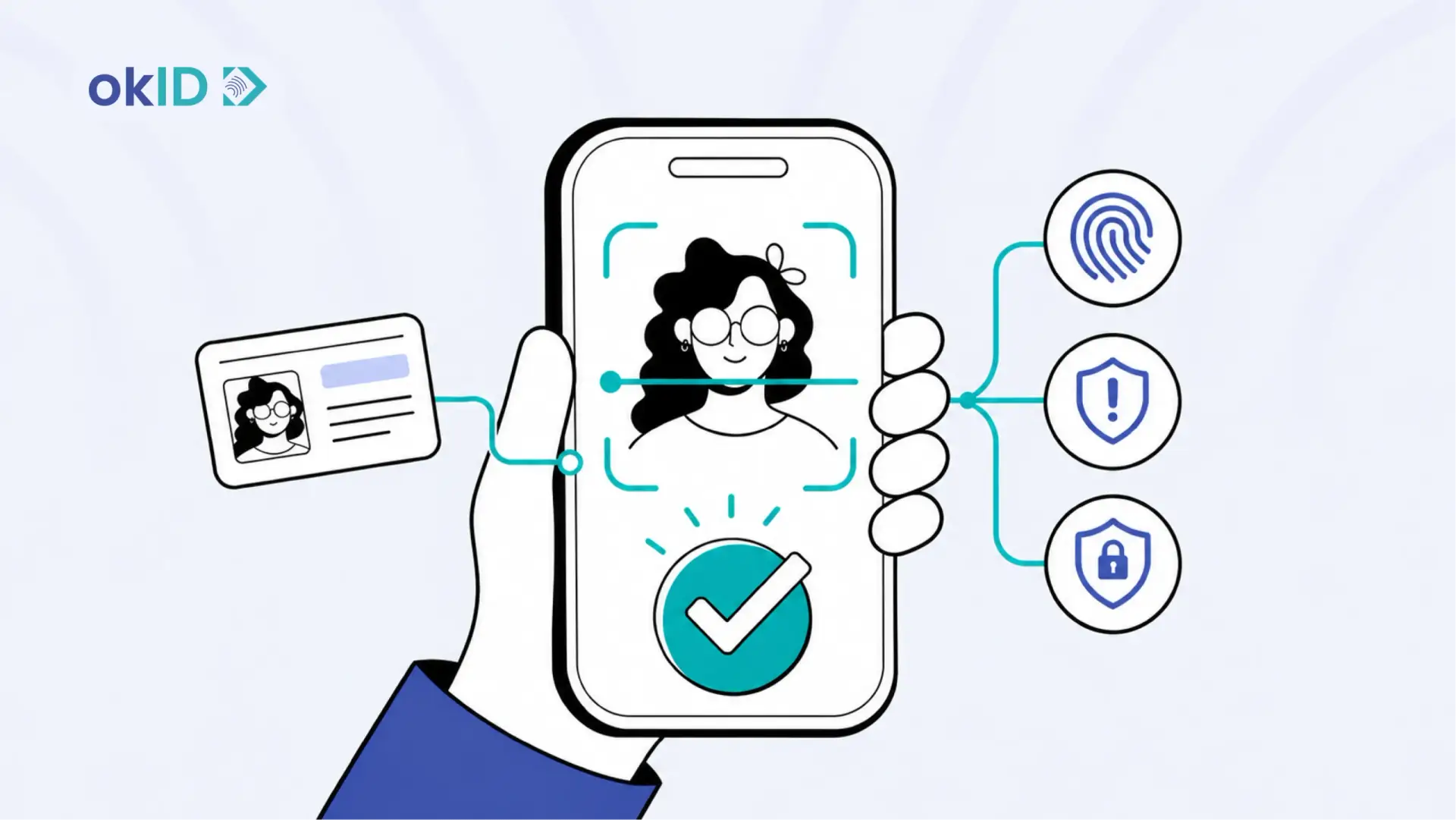
Biometrics are no longer limited to matching a selfie with an ID document. In 2026, advanced biometric systems are becoming more layered, combining facial recognition, device signals, risk indicators, and user behavior to confirm that a real person is present.
Modern biometric verification matters because fraud tactics are improving. Deepfakes, replay attacks, masks, edited images, and synthetic identities can make basic face matching less reliable in high-risk digital journeys.
Presentation attacks involve showing a photo, mask, or recorded video to the camera, while injection attacks use fake images or videos sent directly to the verification system without using the camera. Businesses choosing a face liveness detection software should ask whether its technology can detect both types of attacks or only one.
Key benefits:
- Faster verification
- Fewer failed attempts
- Stronger protection against presentation attacks
- Better customer experience
- Higher onboarding completion rates
Business impact: Advanced biometrics help businesses raise security standards while keeping verification simple enough for real customers to complete.
Passive Liveness Is Becoming the New Baseline
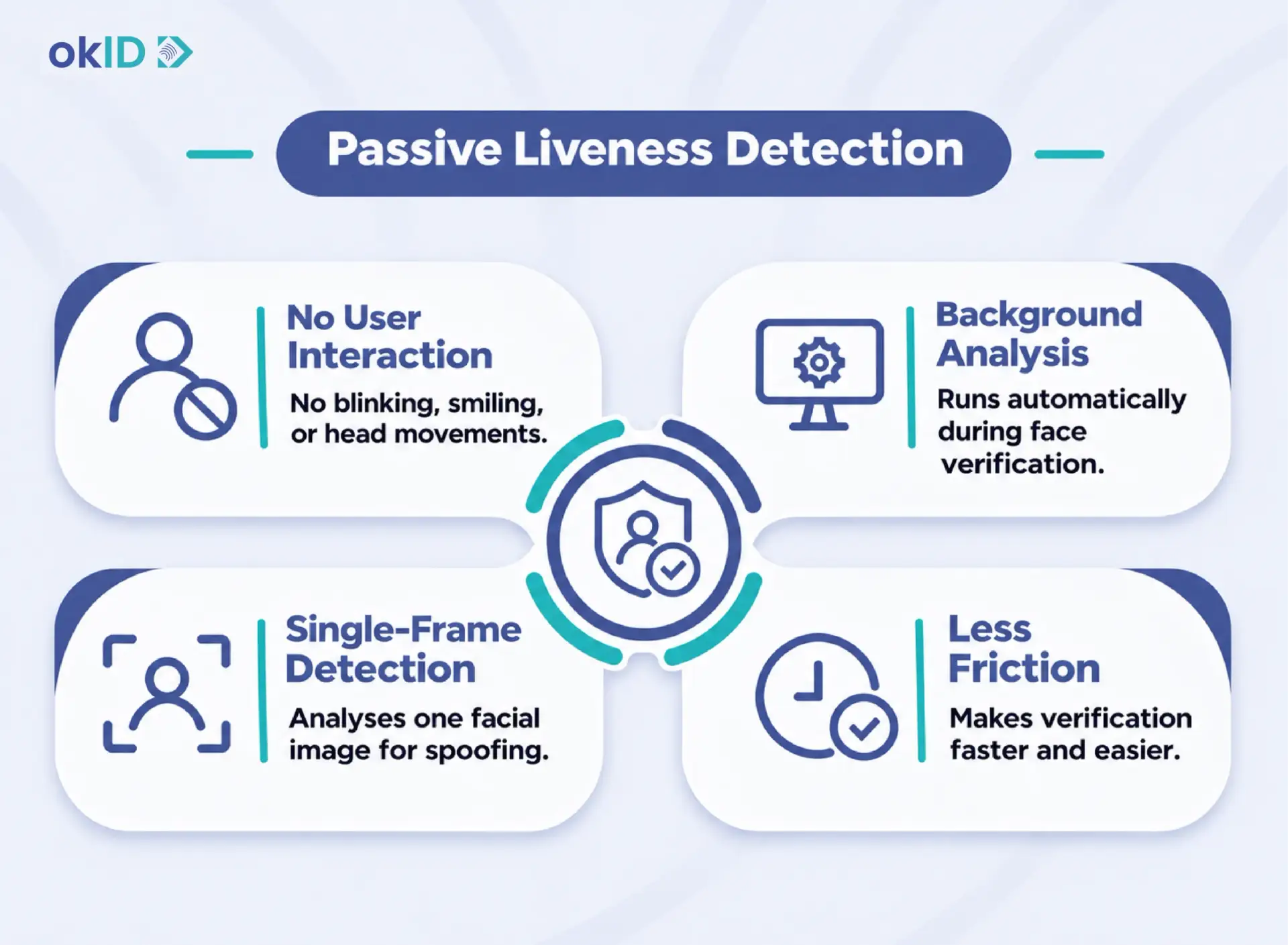
Passive liveness works in the background without asking users to blink, smile, or turn their heads. That creates a smoother verification experience while helping businesses detect spoofing attempts before they pass through onboarding.
For regulated industries, liveness detection can strengthen fraud prevention without making the onboarding process feel slow or complicated for legitimate users.
3. Continuous Fraud Detection Replaces One-Time Verification
One-time checks are no longer enough. A user may pass onboarding, but risk can appear later through account takeover, suspicious transactions, credential compromise, or changes in behavior.
That is why continuous fraud detection is one of the most practical digital identity trends for 2026. Instead of treating verification as a single event, businesses are building identity risk checks across the customer lifecycle.
Where continuous detection helps
- Account recovery
- High-value transactions
- Suspicious login attempts
- Profile changes
- Repeat verification requests
- Unusual device or location activity
This approach does not mean every customer needs to be reverified all the time. It means businesses can apply extra checks only when risk signals justify them.
Business impact: Continuous monitoring helps companies reduce fraud losses while avoiding unnecessary friction for trusted users.
4. Privacy-First Digital Identity Gains Momentum
Privacy is playing a bigger role in identity verification. Customers want to know why businesses collect their personal data, how they store it, and whether they’re asking for more information than they really need.
Privacy-first verification matters because customer trust depends on more than accurate identity checks. A verification process can be technically secure but still lose customer confidence if it feels invasive or unclear.
Privacy-first verification focuses on
- Collecting only necessary data
- Making consent clear
- Protecting sensitive documents
- Securing biometric information
- Limiting unnecessary data exposure
- Supporting compliance requirements
Business impact: Businesses that balance identity assurance with privacy can reduce compliance risk and build stronger long-term trust with customers.
Under the updated eIDAS framework, EU Member States must provide European Digital Identity Wallets by the end of 2026. These wallets will let users share verified information, such as proof of age, without revealing more personal data than necessary.
5https://digital-strategy.ec.europa.eu/en/policies/eudi-regulation. Industry-Specific Identity Verification Becomes the Norm
Generic verification workflows are becoming less effective because different industries face different risks. A bank, hotel, airline, real estate company, and payment provider may all need to verify identity, but they do not need the same customer journey.
- Financial services need KYC and AML checks.
- Travel companies need fast passenger verification.
- Hospitality brands need smoother guest onboarding.
- Real estate firms need reliable remote identity confirmation.
- Insurance providers need fraud-resistant customer verification.
A more tailored approach helps businesses match verification strength to actual risk. It also prevents low-risk users from being pushed through unnecessarily heavy checks.
Financial institutions in the EU also need to prepare for the new Anti-Money Laundering Regulation (EU) 2024/1624, which generally applies from July 10, 2027. During 2026, affected businesses can review their customer due diligence procedures, identity verification processes, and recordkeeping practices ahead of the deadline.
Business impact: Industry-specific workflows improve accuracy, reduce abandonment, and make verification more relevant to the customer journey.
Which verification capabilities matter most for high-risk industries?
High-risk industries should prioritize AI-powered verification, continuous fraud detection, advanced biometrics, and privacy-first processes. These trends help businesses verify users more confidently while reducing friction for legitimate customers.
6. Customer Experience Becomes Part of Identity Security
A secure verification process can still fail if customers abandon it. Long forms, unclear instructions, poor mobile capture, and repeated failures can increase drop-off and create extra support work.
In 2026, businesses are paying closer attention to how identity verification affects customer experience. Businesses are realizing that better UX does not weaken security. In many cases, it improves security because more legitimate users complete verification.
For example, mobile driver’s licenses (mDLs) are changing how people verify their identity. In April 2026, California expanded its mDL program to Samsung Wallet, reporting 1.7 million active mDLs. These digital IDs can be used at participating airport security checkpoints and supported online services, reducing the need to present a physical document in those situations.
Experience improvements that matter
- Mobile-first document capture
- Clear instructions
- Fewer manual steps
- Faster error recovery
- Shorter review times
- More intuitive verification flows
Business impact: Better onboarding improves conversion, reduces support costs, and helps businesses maintain trust at the first customer touchpoint.
7. Unified Identity Platforms Replace Standalone Verification Tools
Many businesses still rely on separate tools for OCR, NFC, biometrics, fraud checks, document verification, and compliance workflows. These tools can solve individual problems, but they often create complexity as the business grows.
One of the most operationally important digital identity trends is the move toward unified identity platforms. Instead of managing several disconnected tools, businesses want a single system that supports multiple verification capabilities within a single workflow.
Why are businesses consolidating
- Simpler integrations
- Centralized reporting
- Lower operational complexity
- More consistent customer journeys
- Better scalability across markets
- Faster response to new fraud patterns
Unified platforms also make it easier for teams to evaluate risk across the entire verification journey rather than reviewing isolated signals from separate systems.
Business impact: Consolidation helps businesses reduce complexity while improving control, visibility, and long-term scalability.
How Digital Identity Has Evolved Beyond Traditional Verification
Traditional verification focused mainly on confirming identity at onboarding. Modern digital identity is broader, smarter, and more connected to trust across the customer lifecycle.
The table below compares traditional verification with the modern approach businesses are moving toward.
| Traditional Verification | Modern Digital Identity |
|---|---|
| One-time identity check | Continuous identity assurance |
| OCR-focused workflows | AI, biometrics, and fraud intelligence |
| Manual review heavy | Automated risk-based decisions |
| Compliance-first | Compliance, security, and customer experience |
| Separate tools | Unified identity platforms |
This shift matters because digital identity is no longer only about asking whether someone is who they claim to be. It is about deciding whether a business can continue trusting the interaction as the customer journey evolves.
How Businesses Can Prepare for the Future of Digital Identity
Businesses do not need to adopt every new technology at once. A better approach is to identify which digital identity trends are most relevant to their industry, risk exposure, and customer journey.
Start by reviewing your current onboarding process. Look for points where users drop off, fraud risk increases, or manual reviews slow down operations. Then evaluate whether your existing tools can support AI, biometrics, fraud detection, compliance, and scalability together.
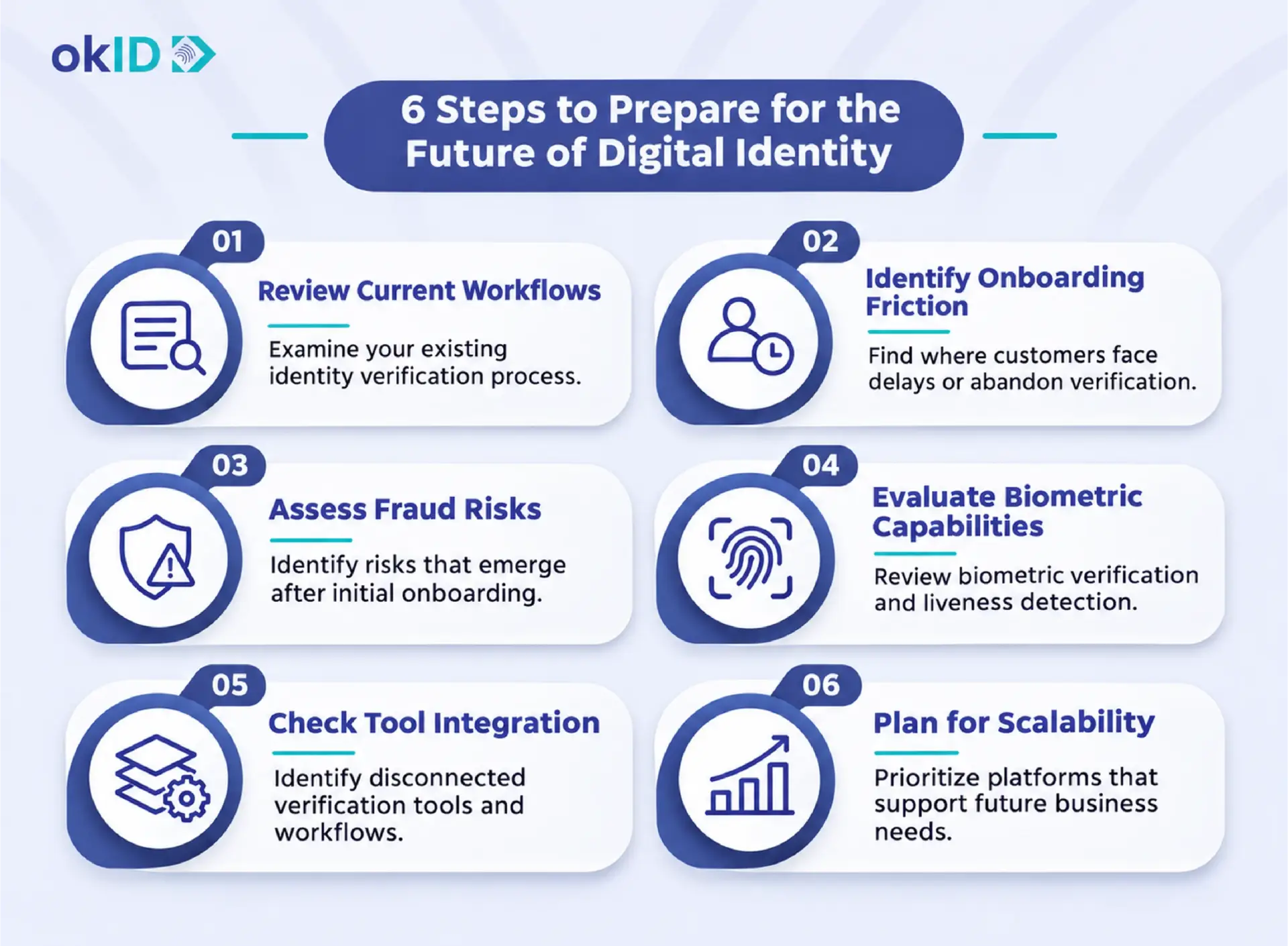
A practical preparation checklist
- Review your current verification workflow.
- Identify onboarding friction points.
- Check where fraud risk appears after onboarding.
- Evaluate biometric and liveness capabilities.
- Assess whether your verification tools are fragmented.
- Prioritize platforms that can scale with future requirements.
Businesses that prepare early will be better positioned to reduce fraud, improve conversion, and meet future compliance expectations.
How okID Supports Modern Digital Identity Verification
okID helps organizations streamline digital onboarding with AI-powered document checks, biometric face recognition, NFC reading, fraud detection, and compliance capabilities on a single platform. It is designed to support faster onboarding, stronger fraud resilience, and a smoother customer journey.
Why Digital Identity Trends Matter Beyond 2026
Digital identity trends in 2026 point to one clear direction: identity verification is becoming smarter, more continuous, and more connected to customer experience. Businesses can no longer treat verification as a simple compliance checkpoint.
AI, biometrics, continuous fraud detection, privacy-first design, industry-specific workflows, better UX, and unified platforms are changing how organizations establish digital trust. Together, these trends enable businesses to reduce fraud, streamline onboarding, strengthen compliance, and deliver more secure customer experiences.
Organizations that begin adapting today will be better prepared for the next wave of identity challenges as customer expectations, fraud techniques, and regulations continue to evolve.
FAQs About Digital Identity Trends in 2026
Which digital identity trends should businesses prioritize first?
AI-powered verification and continuous fraud detection usually come first because they directly affect fraud risk, manual review, and onboarding speed.
Are passkeys part of digital identity trends in 2026?
Yes, but they solve authentication, not identity proofing. Passkeys help users log in securely after a business has already verified their identity.
Will AI make identity verification fully automated?
Not fully. AI will automate more checks and risk scoring, but high-risk or unclear cases may still need human review.
How can businesses reduce fraud without hurting onboarding conversion?
Use risk-based verification. Low-risk users get a faster flow, while higher-risk users trigger stronger checks, such as biometrics or liveness checks.
How often should businesses review their identity verification strategy?
At least once a year, or sooner if fraud increases, conversion drops, regulations change, or the business expands into new markets.