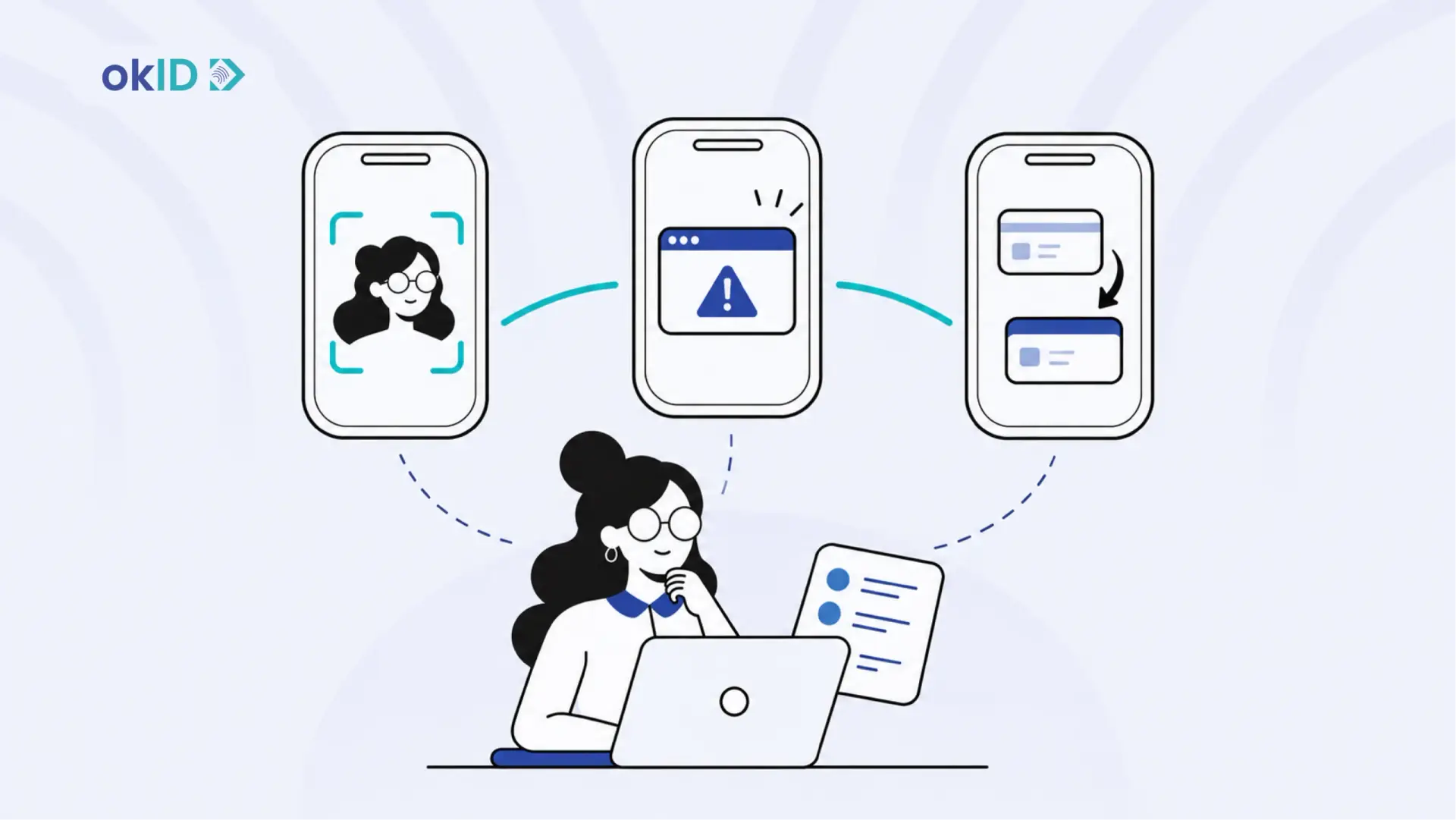
A customer passes an identity check on Monday and loses control of an account by Thursday. Six changes are shaping how teams respond in 2026: AI-assisted alert reviews, session monitoring, stronger recovery checks, testing for injected identity media, security signals shared across systems, and fraud models evaluated against investigated cases. The customer may still need a way to regain access if a control gets it wrong.
In the ACFE/SAS 2026 survey, 77% of respondents reported an increase in deepfake social-engineering fraud volume over the preceding two years. For account recovery and ongoing sessions, the July 2025 NIST revision offers newer guidance that fraud teams can test against their own processes.
A bank or fintech still has to decide what action a warning justifies. A legitimate customer’s new device, for example, should not automatically be treated as account takeover.
Key Takeaways
A fraud event calls for evidence relevant to that action. A single verification result does not settle the entire case.
- The ACFE/SAS benchmark reports increased AI use in its survey series but does not establish adoption across all companies.
- Monitoring detects a change in session risk; step-up checks determine how to interrupt a sensitive action.
- Presentation attacks and injected media call for separate protection and testing.
- okID supplies identity-check evidence; final account and payment decisions remain with the business.
- Shared security events matter only when a receiving system acts on them.
Which Fraud Prevention Trends Are Shaping 2026?
A fraud team needs to know what to do with an alert after it arrives. The changes below concern that investigation and the checks applied to later customer requests.
1. AI-Assisted Review of Fraud Alerts
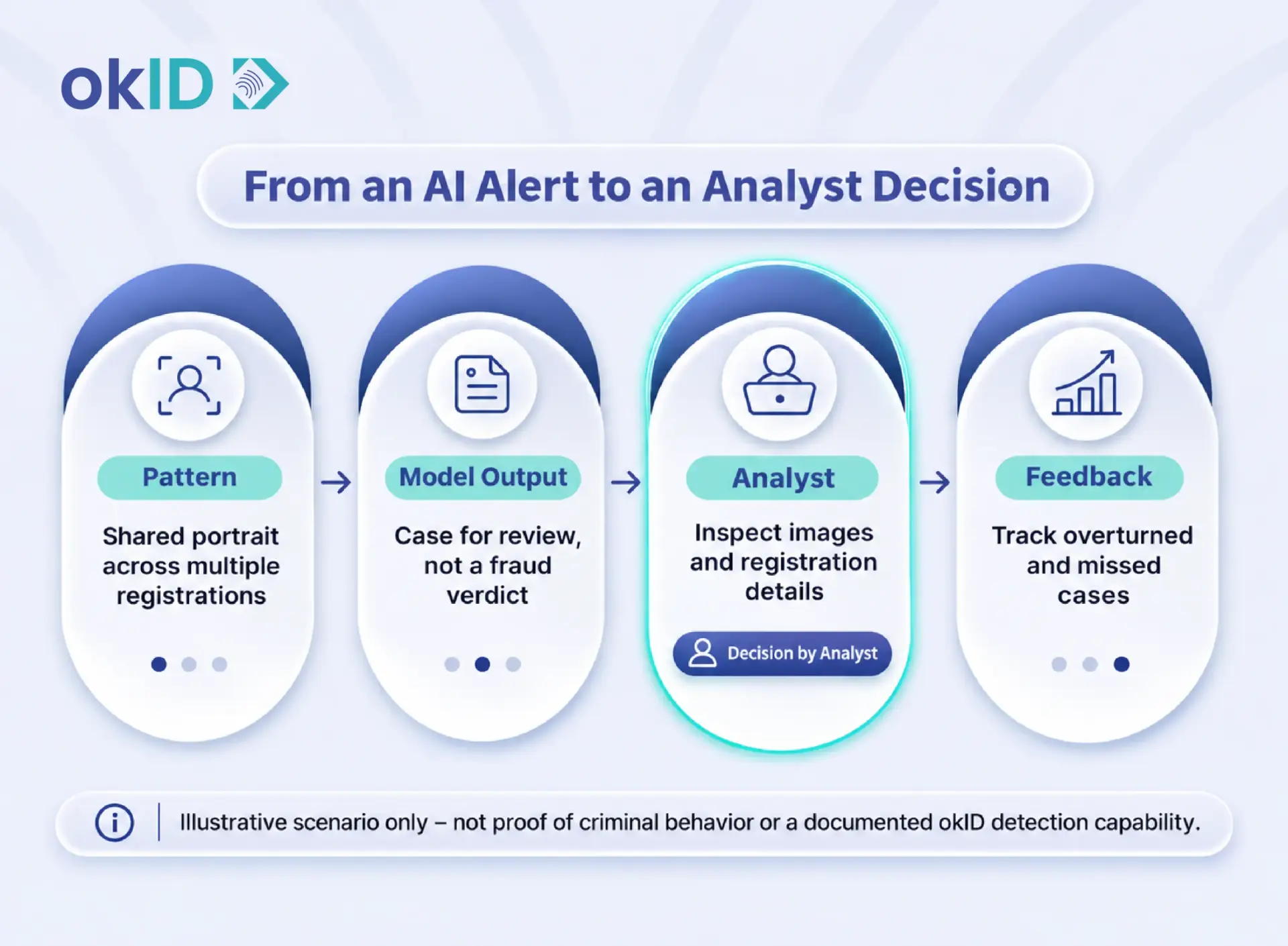
For example, a model groups five registrations that contain the same portrait under different names. An analyst then examines the submitted images and registration details together before deciding how to handle the accounts.
Only 25% of respondents to the ACFE/SAS 2026 benchmark said their organizations used AI or machine learning for data analysis, compared with 18% in its separate 2024 study. More fraud teams are working with model-generated alerts, but the figures do not support treating AI review as standard practice across the industry.
- Review the results: Keep the original alert with the analyst’s decision. Record why a decision was overturned and count confirmed fraud found after review.
- Check missed cases: Test the model against known outcomes, including fraud it failed to flag. A shorter queue alone says nothing about those missed cases.
2. Monitoring Extends Beyond the First Successful Login
A successful sign-in says little about the next hour. A session might later show a sudden change in device or network characteristics, followed by an attempt to alter recovery information. Monitoring provides an opportunity to detect that change after the original authentication event.
An operator can test a risky session against the response options in NIST’s July 2025 digital identity revision: reauthentication, termination, or notifying support. The practical 2026 question is how a service handles an unusual request alongside other signals, rather than treating an IP change alone as proof of takeover.
Travel and mobile-network handoffs can change a customer’s IP address during a session. Before interrupting access, check the accompanying activity. An attempt to change recovery details gives the reviewer more to investigate than the address change alone.
3. Step-Up Verification During Account Recovery
Fresh document-and-face evidence is useful during recovery if the operator doubts who is making the request. Approving new bank details requires an authorization check too: a real customer might be acting under a scammer’s instructions.
Include a customer who has lost their usual authenticator in the recovery test. NIST’s 2025 revision describes methods including repeated identity proofing for applicable accounts, with notifications after recovery. A 2026 audit can then check which route the customer received and what its log records, beyond a simple failed-check status.
4. Testing the Identity Capture Channel
A convincing video may be sent directly into the verification flow rather than shown to a camera. NIST’s July 2025 revision added controls for forged media and digital injection during remote identity proofing. For a 2026 test, examine how that media reached the verifier, not only how its image appeared.
Stopping a printed photo at a liveness check does not demonstrate resistance to injected video. Test the capture-channel safeguards described in NIST SP 800-63-4, including forged-media detection, separately from presentation-attack checks.
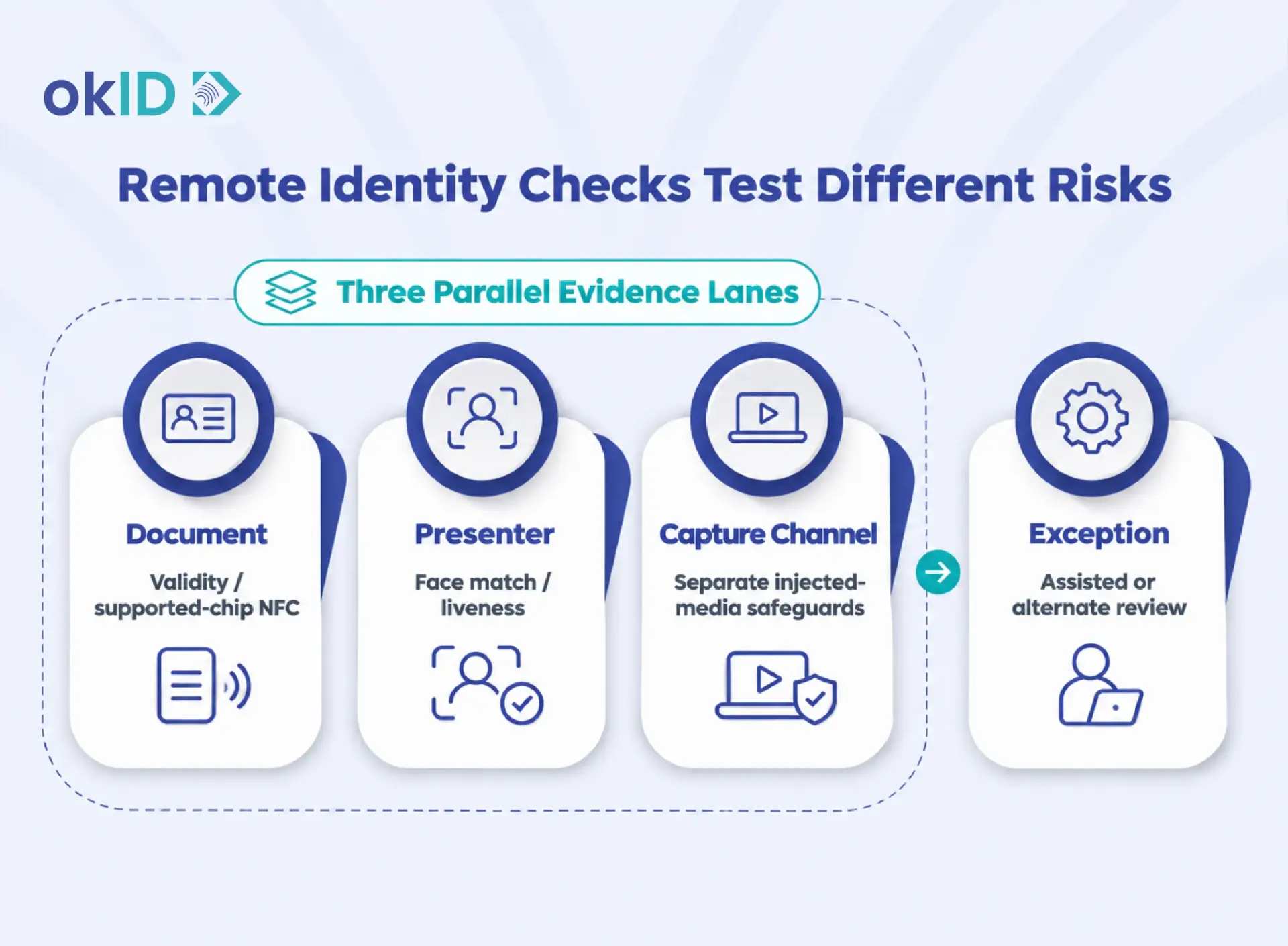
- Document validity checks examine the ID itself.
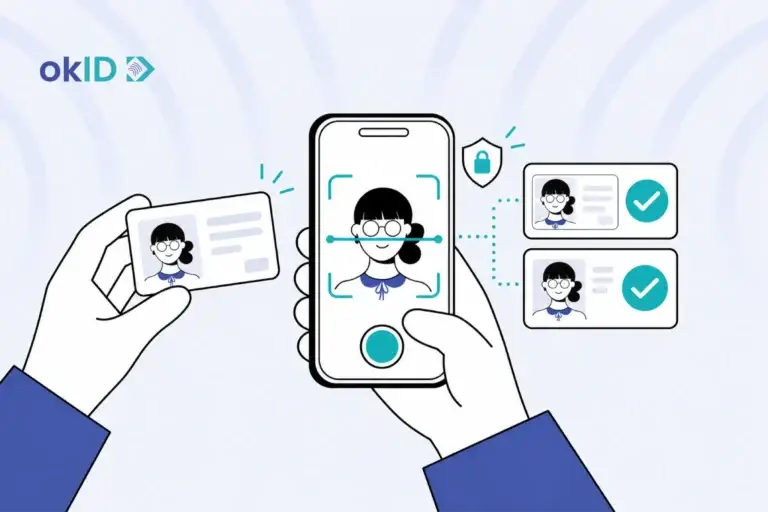
- Face matching connects the applicant to the portrait; face liveness detection tests part of the live-capture claim.
- NFC adds chip evidence for supported documents. Test a KYC verification solution against injected media separately and provide an exception route for failed capture.
Report capture failures separately from documented attack attempts. One overall success rate would hide the difference.
5. Connected Security Signals Help Teams Respond Across Systems
An identity provider’s warning is of little use to a session service that never receives it. After receiving the event, that service might request fresh authentication or suspend access under its own rules. An uncertain warning can go to an analyst for investigation.
In 2026, a useful cross-system test sends a deliberately incorrect alert and inspects what the receiving service does with it. NIST’s July 2025 session guidance describes shared signaling as one possible support for monitoring. The receiving service still owns its response; an alert does not establish that an account was taken over.
Repeat the test with delayed and incorrect alerts. The team operating the receiving service should decide how those cases are handled.
6. Testing Fraud Models Against Investigated Cases
Before a model influences a decision to reject a genuine customer’s request, its errors need scrutiny. In the ACFE/SAS 2026 benchmark, 75% of respondents considered bias or lack of fairness important when adopting AI, but only 18% said their organizations tested models for bias or fairness. Those responses show a gap in reported testing, not how fair any individual model is.
Investigated cases provide a test set for checking errors:
- Compare genuine customers incorrectly flagged with confirmed fraud that slipped through.
- Check how model or rule changes affected customers across relevant groups.
A reversed rejection is difficult to investigate if its record omits the model version that produced it. Keeping the analyst’s reason with that version makes the decision available for later testing. Unresolved findings still require human review before being treated as fraud.
Count confirmed fraud found in the test set alongside the total alerts it generated.
What Happens When a Customer Replaces the Payout Account?
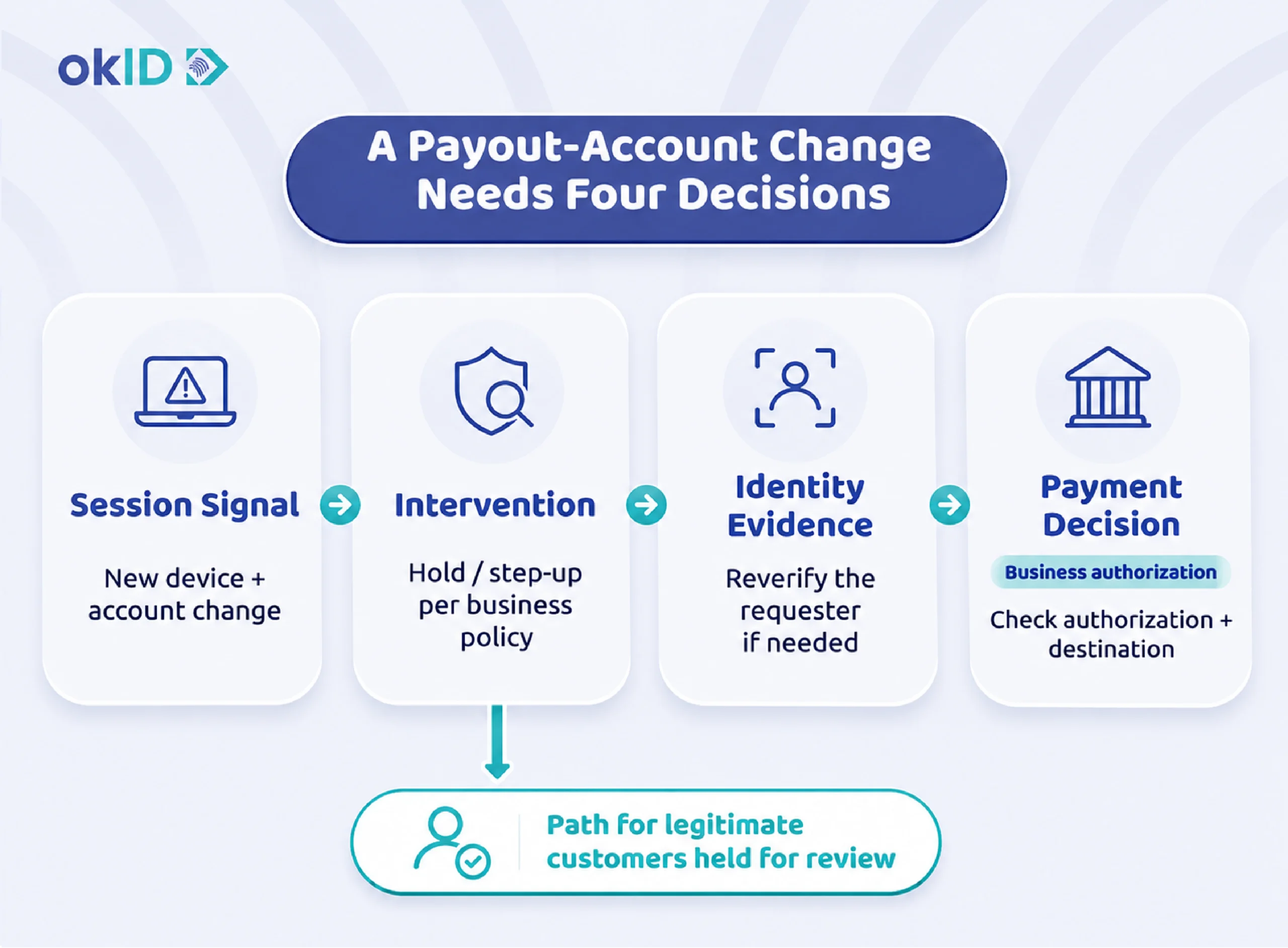
Consider a request to replace the bank account for a large payout, submitted after a successful login from an unfamiliar device. The operator has the following checks to work through:
- Session signal: Compare the device change with the request to replace the payout account. Flag the combination for investigation without recording it as a confirmed takeover.
- Intervention: Apply the operator’s rule for payout-account changes, such as holding the request until the customer completes stronger authentication.
- Identity evidence: if account ownership is in doubt, a fresh document-and-face verification adds evidence about the requester.
- Payment decision: the business separately checks authorization and the new payout destination.
A matching face leaves the destination account’s ownership unverified. Even after a successful login, the operator must check that the customer intended the transfer.
Track confirmed abuse among flagged changes and time to resolution.
Keep a separate count of genuine customers delayed or lost during the checks, with a support route for resolving their cases. Otherwise, fewer suspicious changes could conceal a rise in abandoned legitimate requests.
How Does okID Support Identity-Based Fraud Prevention?
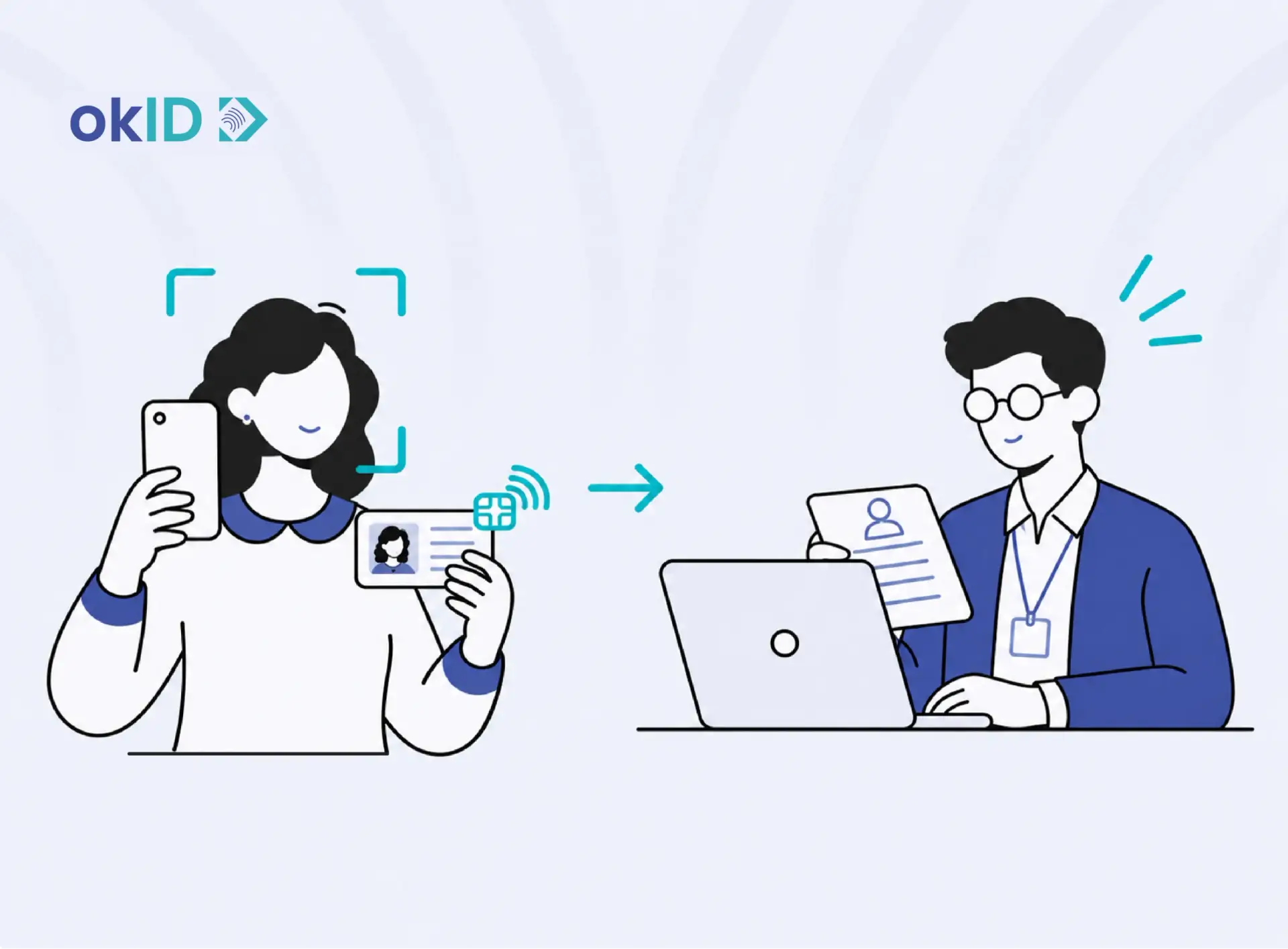
When a business seeks fresh proof of the person behind an application or a high-risk account request, okID provides identity verification software for that specific need. It checks captured documents and compares a face against the document portrait. Active or passive liveness is available, along with NFC checks for supported chip documents.
Verification results can enter an operator’s workflow through hosted and API-based integration routes.
During account recovery, an operator requests an additional configured verification before restoring sensitive access.
The returned identity result is evidence for the operator’s decision. The verification result does not authorize a payout or score subsequent account activity. A person can also complete a genuine identity check under pressure from a scammer.
For regulated lenders and banks, identity verification for financial services has a defined place in onboarding and subsequent re-verification. Those teams retain responsibility for approving account changes and for monitoring transactions. okID’s documented identity checks do not establish continuous behavioral monitoring.
Conclusion: How Should Teams Apply These Fraud Checks?
Before adding a new check, trace an alert through the system that controls the account. A recovery warning that nobody can act on leaves access exposed, even if the detection worked.
In the payout example, staff also need a route for a genuine customer whose request remains on hold. Track those delays alongside confirmed abuse when judging the change.
okID contributes identity evidence at onboarding and sensitive re-verification points within broader fraud prevention solutions. To explore a suitable configuration, contact okID about the identity checks your customer journey actually requires.
FAQs: What Else Should Fraud Teams Know?
A failed remote check or a stolen-document alert may also involve a legitimate customer. Reviewers need a way to investigate the result without treating the warning itself as proof of fraud.
1- Can a genuine identity document also be reported stolen?
Yes. A stolen passport may retain its authentic security features. For Dutch documents, okID offers a separate stolen-document check through the Dutch VIS system. That coverage stops at Dutch documents. If status information is unavailable, record it as unavailable and investigate further before alleging fraud.
2- What does the ACFE’s 2026 AI adoption figure measure?
It describes the use of AI reported by participating organizations and anti-fraud professionals across industries. The survey was sent in October 2025 and received 713 usable responses. The 2024 and 2026 figures come from different survey editions, not a panel tracking adoption inside the same firms. The percentage is not a bank-specific deployment rate.
3- What should happen if a genuine applicant cannot complete remote proofing?
A documented alternative or assisted route gives a legitimate applicant another way to complete the case, subject to the business’s risk and accessibility requirements.
NIST SP 800-63A-4 discusses exception handling, including the use of trained trusted referees for applicable identity-proofing programs. A failed capture is a case for review or another suitable proofing method, not a fraud finding on its own.
4- How does generative AI use differ from broader AI adoption in the 2026 survey?
The ACFE/SAS survey found that 25% use AI or machine learning for data analysis. A separate measure found 16% reporting generative AI use. These are different survey measures. Adding the percentages together would misrepresent the findings.
5- Is NIST SP 800-63-4 mandatory for every bank or fintech?
No. NIST SP 800-63-4 is technical guidance developed for US federal digital identity services. A private organization’s obligations depend on its applicable rules and contracts. It can still use the guidance to assess identity proofing, account recovery, and session controls.