Age verification in gaming checks a player’s age before an age-restricted feature opens. A signup birthday is a claim, so the game must obtain proof before granting access.
The operator has to specify that gate before choosing a verification vendor. A successful provider response cannot grant broader access than the underlying evidence permits.
Key Takeaways
The operator remains responsible for deciding which player actions the age evidence permits.
- An unfinished check leaves the feature locked when a player returns.
- Store a facial estimate separately from a verified birth date.
- Camera failures have produced no age decision; report disputed estimates separately too.
- The game must apply the activity’s rule to the vendor’s completed check before granting access.
What Is Age Verification in Gaming?
Age verification in gaming establishes age evidence for an eligibility decision. Age assurance encompasses a broader range of methods, including age estimates.
For a document-derived birth date, verification must cover the document and its presenter. An estimate stored in the same field could later be mistaken for the checked date at tournament entry. Keep estimates labeled as predictions, with their source, so the application can assess them against the entry rule.
Where Should Gaming Operators Place Age Checks?
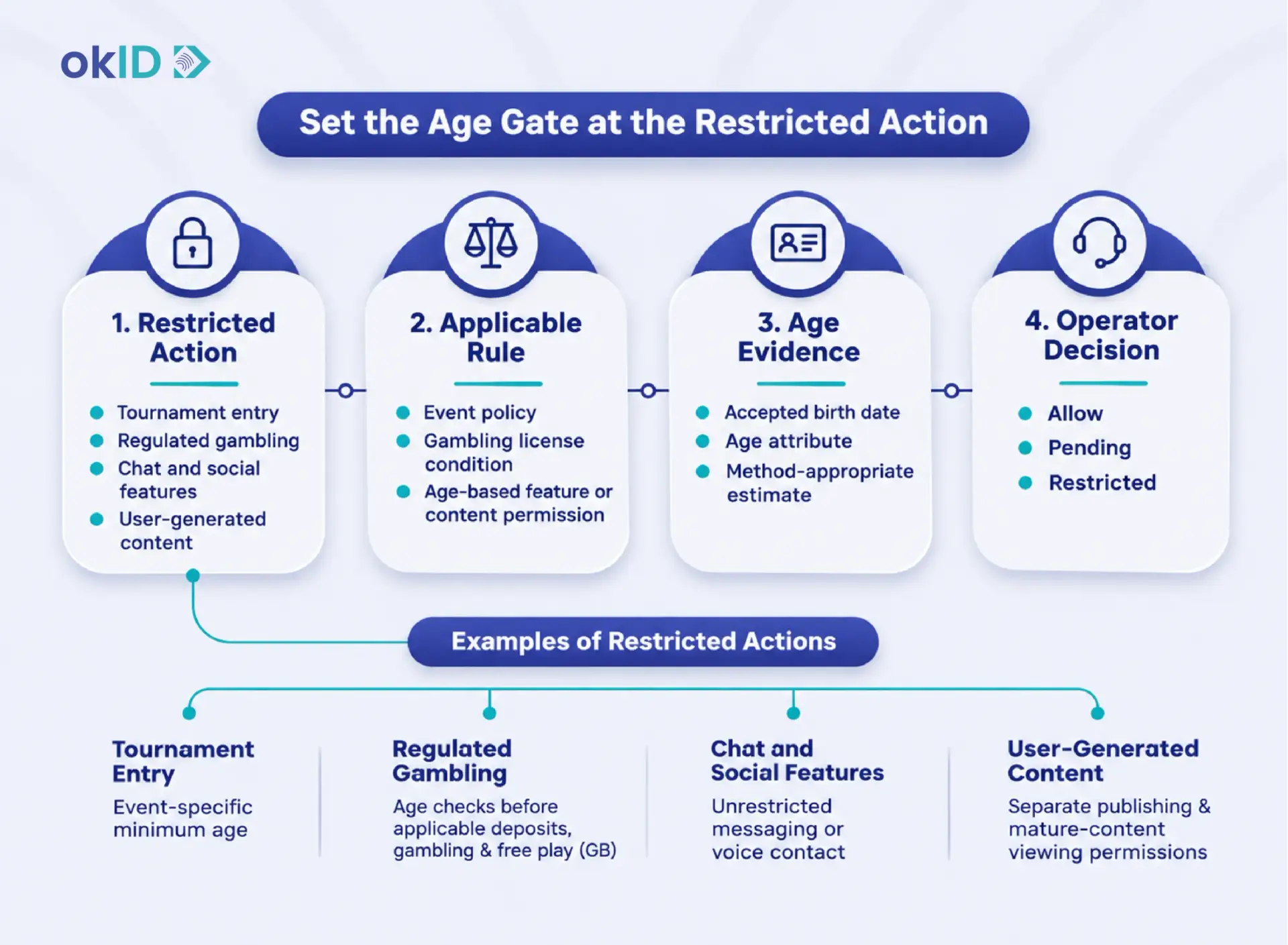
Name the restricted action in the access specification and set the checkpoint from the rule governing that action. For tournament entry, the record must show that the entrant meets the event’s age requirement. A birthday collected when the account was opened may leave that requirement unresolved.
- In the 2026 Fortnite Championship Series, competitors must be at least 13 years old or meet a higher local minimum age. Prize eligibility has further conditions. This event rule should not become a global esports threshold in the platform’s policy engine.
- For Great Britain remote gambling licensees, age verification precedes specified deposits and gambling, including access to applicable free play. The operator’s iGaming identity verification step must precede gambling. A check at withdrawal is too late for those earlier duties.
- Chat and social features: Younger players can receive unwanted direct messages or voice contact. Require the applicable age check before unrestricted messaging or voice chat opens.
- User-generated content: Posting an upload and viewing mature community material may have different age limits. Apply account-age permissions and content ratings separately to prevent access to restricted content.
Specify the eligibility rule in the application logic. A vendor’s completed check is an input, not the final authorization.
For an unfinished check, the account needs a pending state that locks the feature and tells the player how to continue. An approval for one activity must not silently authorize another. That policy choice has to be documented alongside the gate itself.
What Age Verification Methods Are Available to Gaming Platforms?
A self-declared birthday provides the platform with no independent evidence of age. The five sources below offer ways to obtain it, either alone or in combination, but they are not five compulsory stages.
An age-gating API can return a pass for a facial estimate or for a checked date of birth, although those results do not carry the same evidence. When evaluating KYC verification software, inspect the source behind each returned field. Keep unavailable and inconclusive checks separate from an age rejection.
| Age-evidence route | Information returned or established | Player interaction | Operator’s main assessment |
|---|---|---|---|
| Checked identity document | Recorded DOB, conditional on evidence and presenter checks | Submit an eligible ID | Coverage gaps and presenter mismatch |
| Authoritative record or qualifying account | DOB or threshold derived from the accepted source | Supply or authorize access to qualifying data | Availability and verified account linkage |
| Reusable age credential | Age attribute previously established by an issuer | Present an accepted credential | Issuer trust, freshness, holder binding |
| Facial age estimation | Estimated age or threshold signal, not confirmed DOB | Camera capture | Threshold error and media manipulation |
| Nonfacial age inference | Probabilistic age indication from associated data | Varies with underlying data | Suitability of the signal for the restricted action |
A headline completion rate hides why attempts fail. Unsupported documents create capture dead ends; adults near an estimation threshold may require further evidence. NIST observed variation across tested facial age-estimation systems and image conditions, but did not measure okID.
For in-scope UK services, Ofcom guidance calls for a challenge-age approach based on the estimation method’s accuracy. Test how often players near the cutoff need another age check, without treating a facial estimate as a verified birth date.
Age Verification in Gaming: What Do the Supporting Checks Establish?
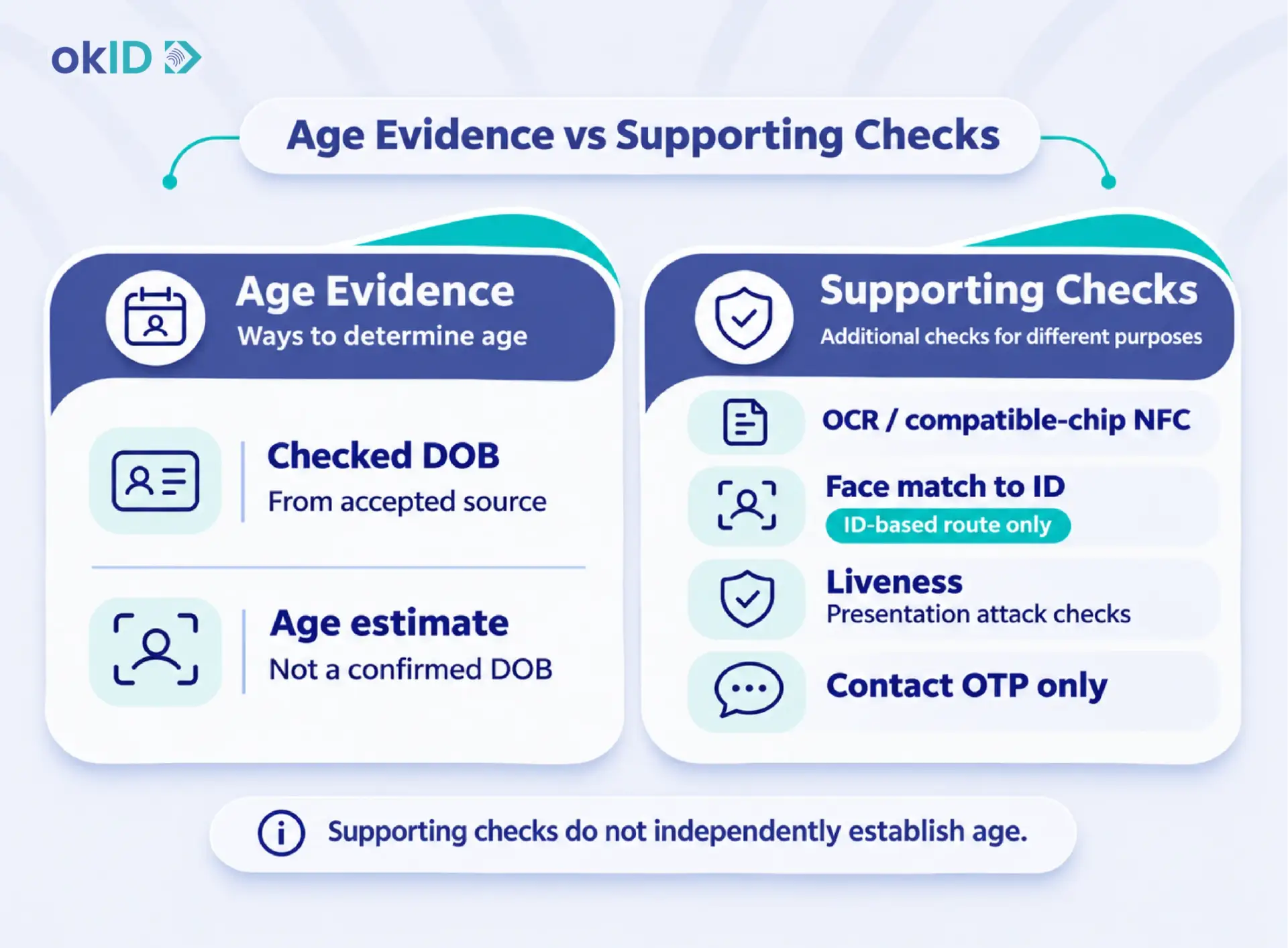
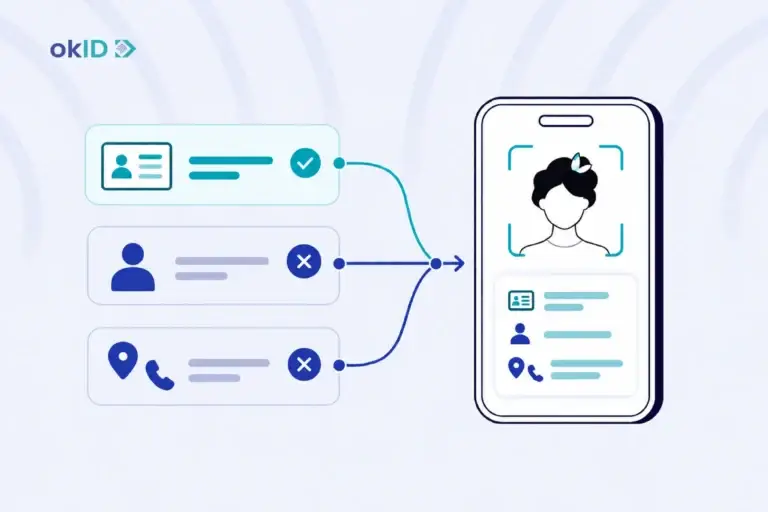
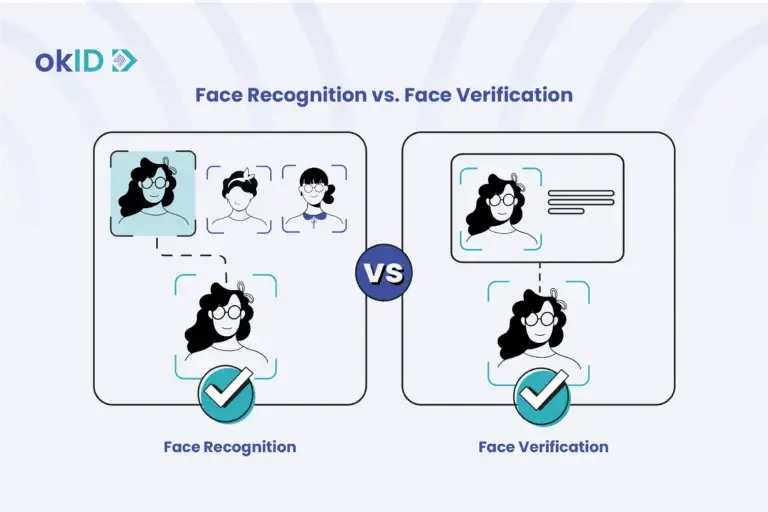
The ID supplies the birth date. OCR extracts its printed fields, and NFC reads the chip on a compatible document. To check that the ID belongs to its presenter, biometric face recognition software compares the person with the ID photograph.
Holding a photograph up to the camera tests liveness against a presentation attack. It does not test an injection that bypasses capture.
A contact-method OTP supplies no age evidence.
Which platforms already run age checks?
Chat access is a common checkpoint, but a storefront can also restrict the pages an account can open:
- Roblox: Players use a facial age estimate or ID check to unlock chat and certain experiences reserved for older users.
- UK Steam players can opt into mature game pages and community hubs through a verified account with a valid credit card.
- Messaging, voice chat, and broadcasting on PlayStation require age verification for adult accounts in the UK and Ireland.
- Xbox restricts UK adults’ voice and text chat and game invites until they verify their age.
- Parental consent lifts voice and free-text chat limits on Epic Games’ cabined accounts. The signup birthday itself supplies no independent age proof.
How Do Gaming Age Requirements Differ Across Activities and Markets?
Store the source of each age requirement alongside the product gate. A tournament policy should not be implemented as if it were gambling legislation.
A multi-market platform also needs a review trigger when the applicable rule or event policy changes. Otherwise, users with old approvals might inherit a restriction threshold that no longer matches the live activity. Treat the rule revision and the verification record as separate parts of the access decision.
| Activity and market | Requirement or policy | Required checkpoint | Limits of the rule |
|---|---|---|---|
| US game handling children’s data | COPPA obligations for covered personal data collection involving children under 13 | Relevant collection and parental-consent decisions | No blanket ID-upload duty for every game account |
| Remote gambling in Great Britain | Age and identity checks under the relevant license conditions | Age before regulated participation; identity before gambling | Applies to relevant licensed operators |
| Licensed gambling in the Netherlands | Minimum gambling age of 18 and player identification; separate Cruks check | Before permitted gambling participation | Cruks addresses exclusion status, not age estimation |
| Fortnite Championship Series 2026 | Event-specific minimum age plus further eligibility conditions | Tournament registration and prize-related review | Competition rules are not general esports law |
| Mobile app in applicable Apple regions | Age-range APIs and regional platform obligations | Where relevant regional service rules apply | An app content rating does not identify the current user |
GDPR Article 8 sets the default age of consent at 16 for children when services are offered directly to them and processing relies on consent. Member States may set 13–15. This is not a general EU gaming minimum. UK online-safety duties depend on the service in scope; Ofcom does not certify the listed vendors.
The FTC’s February 2026 age-only enforcement-discretion statement is conditional and separate from the 2025 COPPA amendments. Other COPPA duties remain relevant.
Which Fraud and Account Risks Survive Age Verification?
An adult who passes a check can hand over the account afterward. Age verification at enrollment cannot authenticate the next session. That gap belongs to account-security controls.
| Risk in the player lifecycle | Contribution from the age check | Control that belongs elsewhere |
|---|---|---|
| Minor supplies an adult birth date | Corroborating evidence may contradict the declaration | Retry controls and detection of borrowed evidence |
| Adult completes verification for a younger user | Presenter checks the evidence with the person at capture | Account/session authentication and handoff controls |
| Multiple adult accounts claim rewards | Age threshold gives little information about account uniqueness | Duplication and abuse monitoring |
| Someone makes an unauthorized purchase | Age status may inform restricted access | Payment authorization and transaction monitoring |
| Submitted selfie or ID has been altered | Verification examines the submitted material | Testing for presentation and injection attacks |
Classifying every later account violation as a verification failure would misdirect the investigation. Investigate which control failed, then attribute the incident to that process.
Give the trust-and-safety team enough event history to identify when the age check happened and the account activity that followed. A new device or a change in login pattern may be more relevant to an account-handoff investigation than immediately repeating document capture.
How Can Operators Reduce Age-Check Drop-Off Without Weakening Controls?
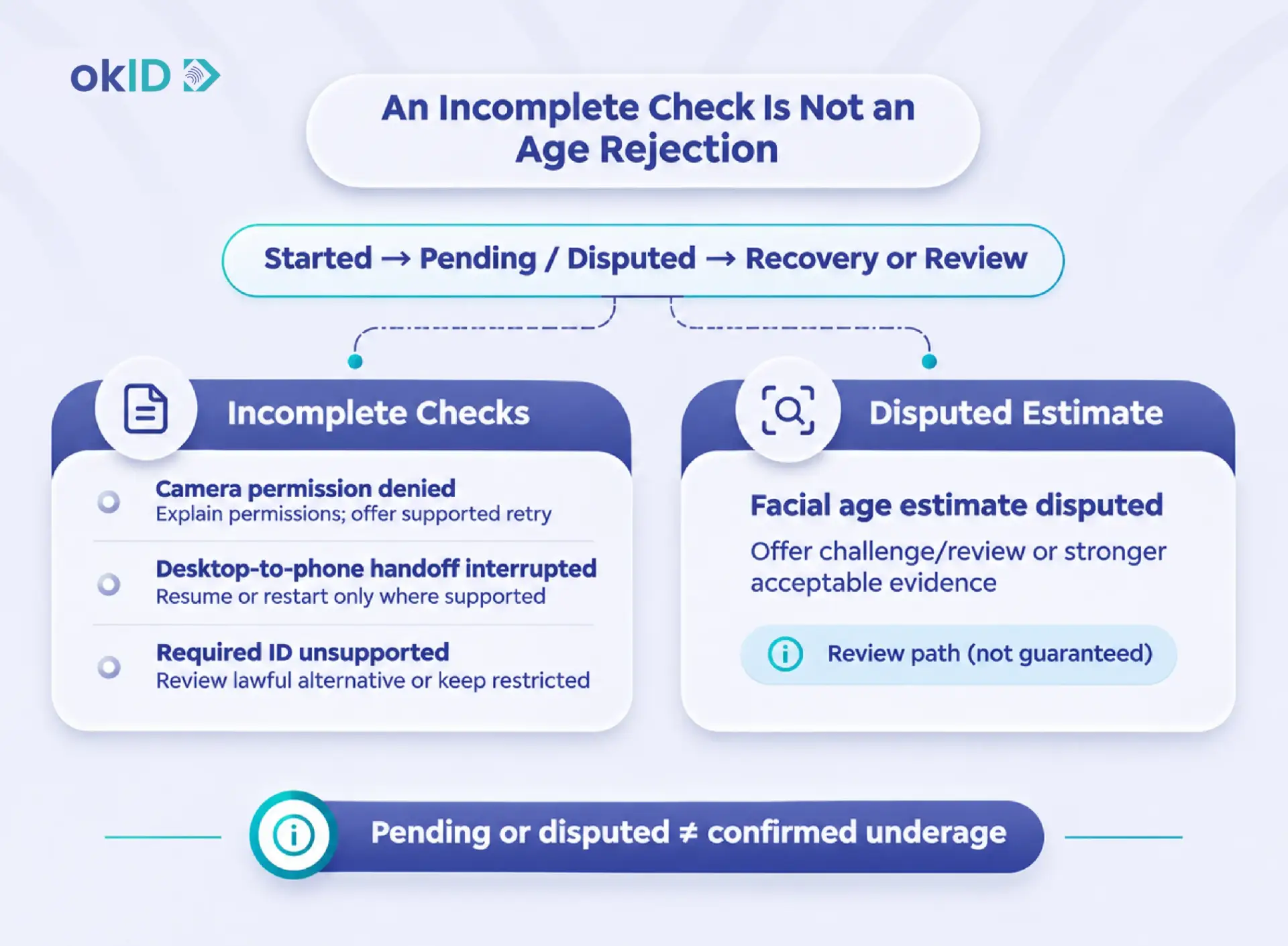
Do not classify a camera-permission error as an age rejection. The distinction affects the support queue and failure-rate reporting.
| Player interruption | What operations sees | Recovery decision to define |
|---|---|---|
| Camera permission denied | Capture never started | Explain permission steps; provide a supported retry |
| Age estimate disputed | Player challenges the estimated result | Offer review or accept stronger evidence when appropriate. UK ICO guidance: label estimates and provide accessible tools to challenge inaccurate decisions. |
| Required ID unavailable | Document path cannot finish | Evaluate a lawful alternative or maintain restricted access |
| Desktop-to-phone transfer fails | Verification session stalls before capture | Test the handoff, disclose device requirements, and provide supported options |
For okID’s mobile capture option, test the complete desktop handoff. If a player has no usable phone, show a supported alternate route or an explicit access restriction.
Example: In a handoff test, a player leaves before taking a photo. The report should show one started attempt and zero completed checks for that device path. Counting an age rejection would imply that an age assessment had been reached in the application.
Before keeping biometric images, document why they are needed and assess the privacy implications.
Say a player reports that their ID type is unsupported. Retrying the camera will not fix the missing evidence route. Assign a named owner to decide if another source is acceptable for that activity, then give support a way to send the ticket to that person.
Conversion targets cannot move a legally required pre-access gate downstream. The research found no universal method-specific uplift.
How Could okID Fit Into an Operator’s Age-Gating Architecture?
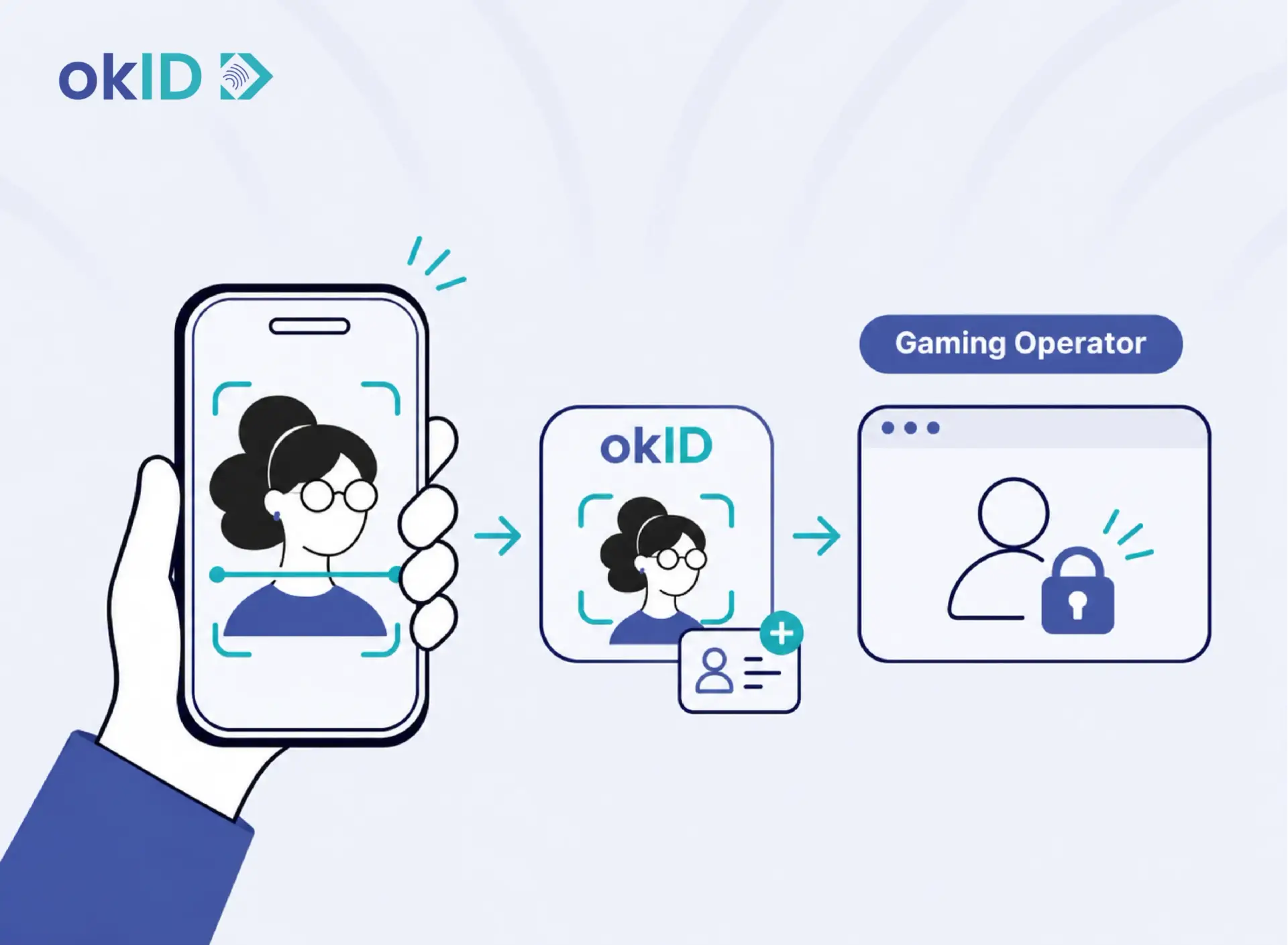
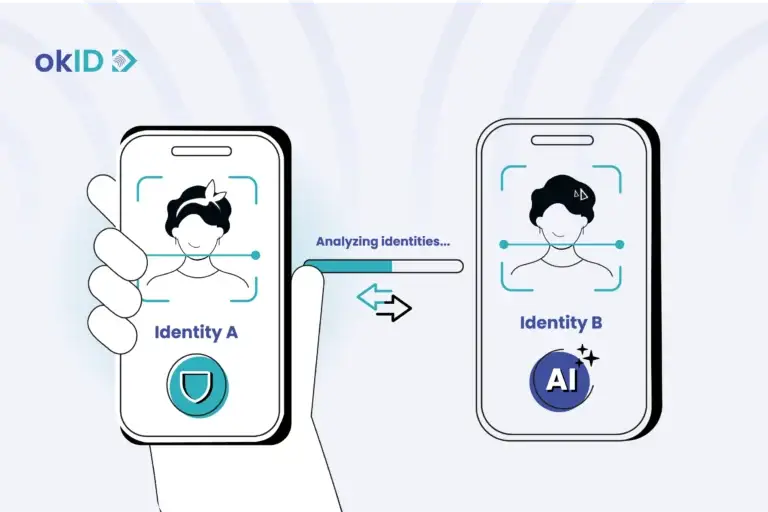
okID Age Verification begins with a selfie. Facial age estimation assesses the player’s likely age, while liveness detection checks for a real person at capture. If the estimate falls close to the access threshold, okID’s flow moves to ID verification; other qualifying users can finish without submitting an ID. The game still controls access using the age result and the rule for that activity.
- On okID’s ID-based route, document verification examines the ID and its birth date, and face matching compares the live selfie with the ID portrait. Selfie-only age estimation skips the face match and returns an estimate, not a verified birth date.
Final Assessment
Two release tests catch an age gate that opens too early:
- Abandon capture, return on another device, and try to open the restricted feature.
- After a capture error, follow the retry instructions shown to the player.
For covered Great Britain remote gambling, run the relevant deposit and free-play tests too. Ask the age verification solution vendor what its responses mean before connecting any of them to permission to play.
Next step: Map okID’s estimated age and ID follow-up results to the game’s access rule. Test the threshold boundary and an interrupted return before opening the feature.
Frequently Asked Questions
What should an operator do when Apple’s age-range API returns no usable value?
Treat an unavailable or declined age-range signal as missing information, not a verdict that the user is underage. Apple’s regional developer guidance applies to its API. The operator still needs to implement the applicable service rules and, where available, choose an accepted alternative. An App Store content rating cannot provide evidence of the age of the person opening the game.
What does adult verification establish in a parental-consent process?
It establishes information about the adult who completed the check. It cannot confirm that the adult has the authority to consent on the child’s behalf, and the child’s age remains unverified. Epic documents adult-check options that differ by country in its parental-consent process.
What information can Great Britain gambling operators request at the time of withdrawal?
A licensee can request information needed at that time for another legal obligation. Under the applicable condition, withdrawal cannot be made contingent on identity information that could reasonably have been obtained earlier. Initial identity checks precede gambling.
What triggers deletion of age-only data under the FTC’s February 2026 COPPA statement?
Once age-only data are no longer needed for that purpose, the statement calls for prompt deletion. It gives no fixed day count. This condition falls under the FTC’s conditional enforcement-discretion policy; it does not prescribe retention periods for all gaming operators or for other data categories.
What should an operator do after a verified adult reportedly gives an account to a child?
Investigate who is now using the account before choosing a new age check. Record the reason for repeating it. A fixed annual recheck interval does not follow from the age verification step alone.